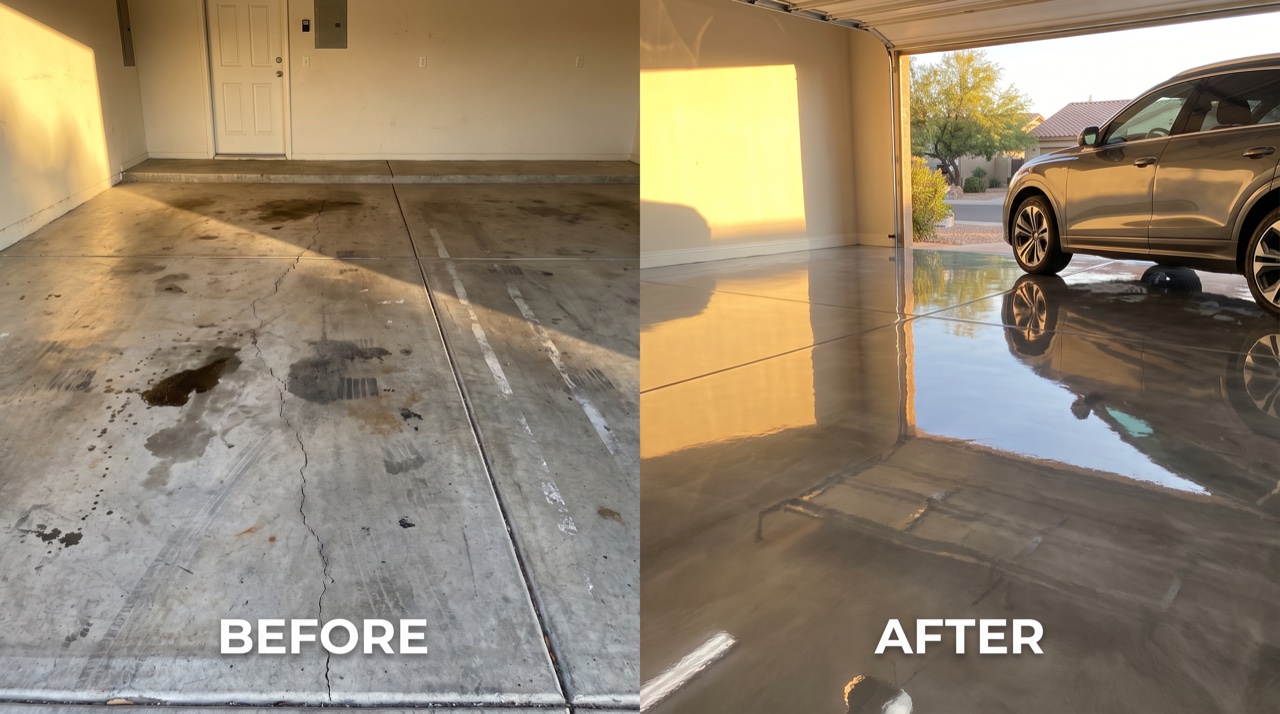
The short answer: Arizona epoxy floors need weekly dust mopping (grit scratches topcoat), monthly damp mopping with pH-neutral cleaner, and seasonal monsoon prep (squeegee water, rinse silica dust immediately). Avoid ammonia cleaners, undiluted bleach, and citrus degreasers - all degrade the polyaspartic topcoat. Professionally installed epoxy needs no waxing, no sealing, and no special products.
Why Arizona Creates Unique Epoxy Maintenance Challenges
Epoxy floors in Phoenix face maintenance challenges that homeowners in other climates don't deal with. Understanding them makes the maintenance routine make sense:
- Desert grit: Arizona dust contains fine silica particles. When tracked onto a garage floor dry, they act like sandpaper on the polyaspartic topcoat under foot traffic and vehicle tires. This is the primary cause of premature topcoat wear - not heat, not chemicals.
- Monsoon mud: July–September storms deposit red Arizona clay on driveways and garage floors. If allowed to dry, clay hardens and requires scrubbing that accelerates topcoat wear. Remove while wet.
- Pollen seasons: February–April brings heavy pollen that mixes with morning dew to create a mildly acidic film on the floor surface. Rinse during peak pollen months.
- Hot tire marks: On floors without a proper polyaspartic topcoat (DIY kits), tires hot from Arizona summer roads can leave tire marks or in extreme cases cause the coating to lift. This is eliminated with a professional polyaspartic topcoat.
Arizona Epoxy Maintenance - What to Do and What to Avoid
✓ DO These Things
- Dust mop or leaf blower weekly to remove grit
- Use pH-neutral cleaner (diluted Simple Green, ZEP)
- Blot oil spills immediately with paper towels
- Rinse monsoon mud while still wet
- Use soft-bristle brush for scrubbing
- Place floor mats at entry points to trap grit
- Rinse pollen film during February–April
- Squeegee standing water after monsoon storms
- Inspect for chips or scratches annually
✗ AVOID These Things
- Ammonia-based cleaners (degrade topcoat)
- Undiluted bleach above 10% concentration
- Citrus-based degreasers (Orange Glo, etc.)
- Abrasive scrubbing pads or steel wool
- Pressure washers above 1,200 PSI
- Letting oil or coolant soak in for hours
- Walking on dried silica dust from monsoon
- Waxing or applying floor polish
- Soap-based cleaners (leave film, attract dirt)
The Arizona Epoxy Maintenance Schedule
| Frequency | Task | Product | Time |
|---|---|---|---|
| Weekly | Dust mop or blow out garage | Dry microfiber mop or leaf blower | 5–10 min |
| Monthly | Damp mop full floor | pH-neutral cleaner (1 oz per gallon warm water) | 15–20 min |
| After each monsoon | Squeegee water + rinse mud | Plain water, squeegee | 10–15 min |
| Quarterly | Deep scrub with soft brush | Diluted Simple Green or ZEP Neutral | 30–45 min |
| Feb–Apr | Extra rinse for pollen film | Warm water damp mop | 15 min, 2x/month |
| Annually | Inspect topcoat, touch chips | Touchup kit or professional assessment | 15 min |
| Every 7–12 years | Topcoat refresh | Professional polyaspartic recoat | 1 day service |
Season-by-Season Arizona Epoxy Care
Easiest Maintenance Period
- Standard weekly dust mop routine
- Monthly damp mop with neutral cleaner
- Good time for annual deep inspection
- February: increase mop frequency for pollen start
Extra Rinse Needed
- Damp mop 2× per month minimum
- Rinse pollen film with warm water
- Keep garage door closed in evenings when pollen peaks
- Floor mat at entry traps pollen from shoes
Highest Maintenance Period
- Weekly dust mop non-negotiable (grit + dust storms)
- Squeegee and rinse after every monsoon storm
- Remove wet mud immediately - don't let it dry
- Inspect garage door seal before monsoon season
Post-Summer Reset
- Full deep scrub after summer accumulation
- Inspect for any topcoat wear from summer grit
- Good time for chip touch-up if needed
- Resume standard monthly maintenance schedule
How to Handle Monsoon Season
Phoenix monsoon season (July–September) is the most damaging period for epoxy floor maintenance. Here's the specific protocol:
Before a Monsoon Storm
- Ensure your garage door bottom seal is intact and seals against the threshold. A failed seal allows water to flow under the door during heavy rain.
- Clear any debris from the driveway that monsoon winds might deposit on the floor.
After a Monsoon Storm
- Squeegee standing water toward the drain or outside. Water left pooling for hours on epoxy is harmless, but it picks up grit as it evaporates that then scratches the surface.
- Rinse mud immediately. Arizona red clay dries to a concrete-like hardness. Wet mud rinses easily in 5 minutes; dried mud requires scrubbing that wears the topcoat.
- Never sweep dry silica dust. Haboob dust contains fine silica that acts as abrasive when dry-swept across the topcoat. Blow it out with a leaf blower (directs it outside), or damp mop to trap it.
⚠ Monsoon Silica Warning: The Arizona dust that arrives with haboob storms contains crystalline silica - the same material used in sandpaper. Walking on this dust dry, or dry-sweeping it across your epoxy floor, causes micro-scratches that accumulate into visible dullness over 2–3 monsoon seasons. Damp-mop or blow out with a leaf blower immediately after any dust storm. This single habit extends topcoat life by years.
Safe Cleaners for Arizona Epoxy Floors
What you clean with matters as much as how often you clean. These are safe for the polyaspartic topcoat on professional epoxy systems:
- pH-neutral floor cleaner (ZEP Neutral Floor Cleaner, Simple Green diluted 1:10) - best all-around choice
- Dish soap in warm water (1 tsp Dawn per gallon) - for routine mopping
- Plain warm water - sufficient for most routine cleaning
- Diluted ZEP Industrial Purple (1:20 dilution) - for grease and oil spots, not routine cleaning
Recognizing When the Topcoat Needs Refresh
Professional polyaspartic topcoat lasts 7–12 years in Phoenix garages. These are the signs it's time for a recoat:
- Water no longer beads on the surface - it spreads flat instead of beading up
- Visible haze or cloudiness in high-traffic lanes (tire paths)
- Dulling in tire tracks that doesn't improve after cleaning
- Fine scratch network visible under raking light from the garage door
- Color fading in sections directly exposed to door-open sun (common on the first 4 feet inside the garage door)
A topcoat refresh costs $1.50–$3.00/sqft and extends the floor life by another 7–10 years without full removal and recoat.
Frequently Asked Questions
Need a Topcoat Refresh or New Epoxy Floor?
ProEpoxy Phoenix handles new installs and topcoat refreshes across the Valley. Same-day quotes available.
Get a Free Quote(512) 555-0000