Installation Tips
Yes - epoxy flooring can be installed in Phoenix summer heat. The key is timing and formulation. ProEpoxy starts all summer garage jobs at or before 6 AM, when concrete surface temps are still in the 75–85°F range, and uses slow-cure heat-rated resins designed for hot climates. Done right, summer installs perform just as well as any other time of year.
Epoxy is a two-part chemical system - resin and hardener - that begins curing the moment they mix. Temperature drives how fast that reaction happens. In cool conditions, you get a generous working window (pot life) of 30–45 minutes. In Phoenix summer heat, that window can collapse to 10–15 minutes on hot concrete.
The specific problems that arise in high heat:
None of these are inevitable. They are all manageable with the right preparation and product selection.
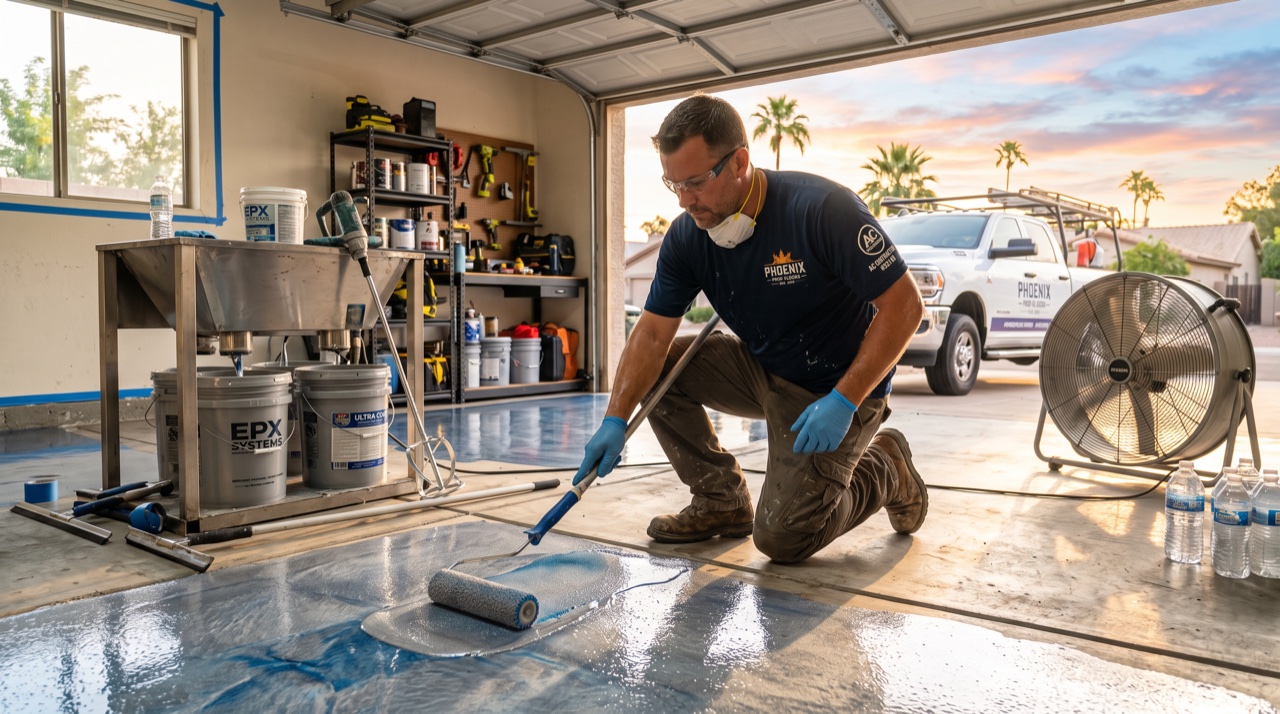
We install epoxy floors in Phoenix 12 months a year. In summer, we adapt our process rather than cancel jobs. Here is exactly what that looks like:
5–6 AM start. Concrete holds overnight temperatures and is coolest at sunrise. We arrive before the slab heats up - typically 75–85°F in a shaded or north-facing garage, which is well within spec.
Surface temp check before mixing. We use an infrared thermometer on the slab before opening any containers. If we measure above 85°F, we wait or reschedule - no exceptions.
Heat-rated slow-cure resins. We stock high-temp formulations with extended pot life specifically for warm climates. These are not standard big-box-store epoxy kits - they are professional-grade systems engineered for 80–90°F application windows.
Small batch mixing. Instead of mixing large volumes at once, we work in smaller batches to ensure every portion is applied before it starts to gel.
UV-stable topcoat. Every Phoenix installation gets a UV-resistant polyaspartic or polyurethane topcoat to protect the epoxy from color fade and surface degradation caused by Arizona sun exposure.
Pro tip: The air temperature in your weather app is not what matters - the concrete surface temperature is. A south-facing Phoenix garage slab can be 30–40°F hotter than the air temperature by 9 AM in July. That is why we check the slab, not the forecast.
Here is a simple breakdown of substrate (slab surface) temperatures and what they mean for installation:
| Slab Surface Temp | Condition | Action |
|---|---|---|
| 50°F – 85°F | Ideal | Normal installation, standard pot life |
| 85°F – 90°F | Acceptable | Use heat-rated resins, small batches, work fast |
| 90°F – 95°F | Marginal | Wait for cooler window or reschedule to early AM |
| Above 95°F | Do Not Apply | Adhesion and finish quality cannot be guaranteed |
Latest start time for Phoenix summer installs to catch slab before peak heat
Critical substrate threshold - above this, we do not apply epoxy
Walk-on cure time in summer conditions with heat-rated resins
Full vehicle traffic clearance after final topcoat in summer heat
October through April is the easiest window. Temps are moderate, humidity is low, and there are no scheduling constraints around early morning starts. If you want the smoothest possible process with maximum flexibility, fall and winter are ideal.
That said, May through September is workable - and sometimes preferred. Many homeowners want their garage floors done before summer so they are ready to use the space for storage or workouts during the hot months. We accommodate summer jobs regularly; it just means a 5 AM crew call instead of 8 AM.
This is the other half of the question - not just whether we can install in heat, but whether the finished floor holds up to Phoenix summers long-term.
A professionally installed garage epoxy floor in Phoenix handles summer conditions without issue when:
Cheap DIY kits and improperly prepped surfaces will peel, bubble, or yellow in Phoenix heat. Professional-grade systems installed correctly do not. Most ProEpoxy clients get 10–20 years out of their floors before needing a topcoat refresh.
Early morning slots are available now. ProEpoxy installs year-round in Phoenix - we handle the heat so you do not have to wait until fall.