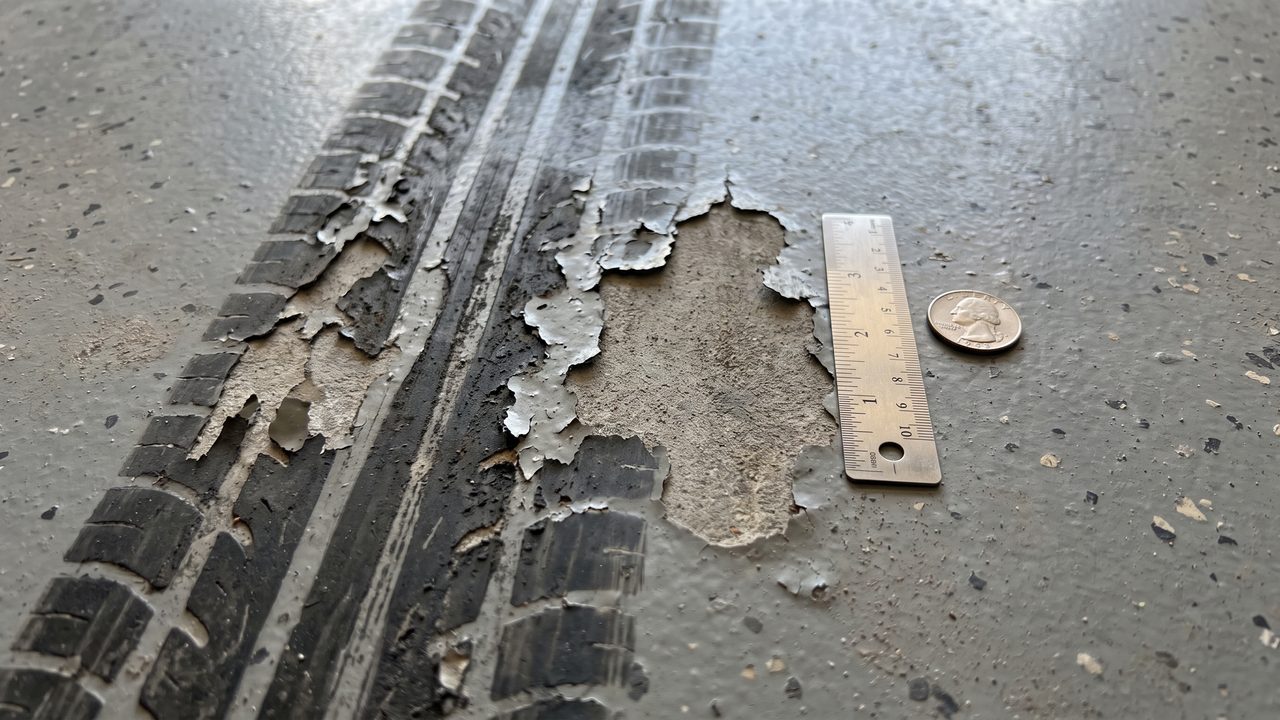
If you've noticed small torn or lifted patches of coating where your tires sit on your epoxy garage floor Phoenix installation, you're looking at one of the most common failure patterns we get called out to diagnose - hot tire pickup, and the peeling that follows it.
This guide explains exactly what causes hot tire pickup, why Phoenix's climate makes it worse than almost anywhere else in the country, which coating systems actually resist it, and what your options are if your floor is already showing damage.
The good news is that hot tire pickup is almost entirely preventable with the right system and proper installation - it's rarely a sign that epoxy garage floors are inherently unreliable, and much more often a sign that a specific installation cut a corner somewhere.
It's also one of the most misdiagnosed issues we see homeowners describe over the phone. People often assume any lifting or peeling on their garage floor must mean the whole installation failed, when in reality hot tire pickup is a fairly narrow, well-understood failure mode with a specific cause and specific fixes - very different from a moisture problem or a general adhesion failure across the whole slab, even though all three can look superficially similar to an untrained eye.
1. What Causes Hot Tire Pickup on Epoxy Floors
Hot tire pickup happens when a tire, softened by heat from driving, presses down on a coating that hasn't fully cured or isn't chemically resistant enough to withstand that combination of heat and pressure - the tire's tread pattern essentially bonds temporarily to the surface and pulls up a thin layer of coating when the vehicle moves.
This is fundamentally a chemistry and cure problem, not a workmanship problem in the way people usually assume. A perfectly applied epoxy coating using the wrong topcoat formulation for hot-climate garage use will still show hot tire pickup, because the issue lives in the coating's chemical resistance profile, not in how carefully it was rolled on.
Why New Floors Are Especially Vulnerable
A coating is most vulnerable to hot tire pickup during roughly its first 30 days, while it's still working through its full chemical cure even after it feels hard to the touch. Parking a hot vehicle on a brand-new floor too soon after installation is one of the most common - and most preventable - causes of early pickup damage, which is why installers emphasize the recommended waiting period so heavily.
This is also why a homeowner who moved in during a cooler season and only starts noticing pickup damage the following summer sometimes mistakenly assumes something changed with the floor itself. In most cases nothing changed except the weather - the coating had a hidden vulnerability all along, and the first genuinely hot summer with the floor in daily use is simply the first time conditions were extreme enough to expose it.
2. Why Phoenix Summers Make This Worse Than Other Cities
Phoenix summers make hot tire pickup dramatically more likely because both the tire and the garage slab are already extremely hot before the vehicle even arrives - a tire that's been driving on 160°F+ asphalt pavement all afternoon adds heat directly on top of a slab that itself may already be well above 100°F inside a closed garage.
| Condition | Mild Climate | Phoenix Summer |
|---|---|---|
| Ambient garage temp | 70-80°F | 100-120°F+ |
| Tire surface temp after driving | 90-110°F | 150°F+ |
| Slab surface temp | 70-85°F | 110-140°F+ |
| Pickup risk on standard epoxy topcoat | Low | Significant |
This combination is specific enough to our climate that coating systems formulated and tested in milder regions genuinely underperform here, even when applied correctly. It's one of the clearest examples of why a Phoenix-specific installer's material choices matter more than they might in a more temperate market.
Garage orientation and daily routine make a real difference too. A west-facing garage that absorbs direct afternoon sun through the door, or a household that habitually pulls straight in after a highway drive rather than letting the vehicle sit in the driveway for a few minutes first, sees meaningfully more pickup risk than a north-facing garage where the car has cooled somewhat before parking. None of this means those homeowners did anything wrong - it simply means their real-world usage pattern puts more thermal stress on a marginal topcoat than a more forgiving routine would.
3. Polyaspartic and Polyurea Top Coats That Resist It
Polyaspartic floor coating and polyurea topcoats resist hot tire pickup significantly better than standard epoxy-only topcoats because they cure to a harder, more chemically stable surface that doesn't soften as readily under combined heat and pressure.
Our polyurea vs epoxy heat comparison breaks down the specific performance differences between these systems in Arizona conditions, but the short version relevant here is straightforward: if hot tire pickup is a top concern, a polyaspartic or polyurea topcoat over an epoxy base coat is the more reliable choice for a Phoenix garage than an all-epoxy system, particularly for a daily-driver garage that sees the vehicle parked shortly after driving in summer heat.
The added cost of upgrading to one of these topcoats over a basic epoxy-only finish is modest relative to the total project cost, and it's arguably the single highest-value upgrade a Phoenix homeowner can make on a garage floor quote specifically because it targets the most common real-world failure this climate produces. Homeowners comparing quotes side by side should treat the topcoat spec as important as the base coat and color choice combined, since it's doing most of the actual performance work once the floor is in daily use.
Cure Time Trade-Offs Between Systems
Polyaspartic systems also cure noticeably faster than standard epoxy, which is a secondary benefit worth knowing about even if it's not the primary reason to choose one. A faster-curing topcoat spends less total time in that vulnerable early-cure window discussed above, which further reduces the odds of early pickup damage during the critical first weeks after installation - a small compounding advantage on top of its better long-term heat resistance.
4. Signs Your Existing Floor Is Already Failing
The earliest sign of hot tire pickup is usually small, isolated torn spots exactly where tires regularly sit - not spread evenly across the floor - which is a useful diagnostic clue that distinguishes it from other coating failure types like general delamination or moisture-related bubbling.
Damage concentrated in rectangular zones matching where wheels regularly park, not spread randomly.
The coating looks ripped or peeled rather than raised in a smooth bubble, distinguishing it from moisture issues.
Lifted coating edges often curl slightly, a texture difference you can feel by running a hand across the spot.
Existing minor pickup damage tends to spread or worsen specifically during the hottest months.
5. Repair Options for Peeling or Lifted Epoxy
Small, isolated hot tire pickup spots can sometimes be patched by grinding out the damaged area and reapplying coating locally, but widespread pickup damage across multiple parking zones usually means the whole topcoat needs to be stripped and replaced with a heat-resistant system rather than patched piecemeal.
- Spot repair: Works for a handful of small, isolated tears, though color/texture blending is rarely perfect on an older floor.
- Full topcoat strip and recoat: The right call once damage covers a significant area or multiple parking zones, upgrading to a heat-resistant system in the process.
- Full regrind and reinstall: Necessary if the underlying base coat is also compromised, not just the topcoat.
If you're seeing this kind of damage, our epoxy floor repair team can assess which category your floor falls into and recommend the least invasive fix that will actually solve the problem long-term, rather than defaulting straight to a full replacement quote.
Preventing Recurrence After a Repair
Whatever repair path you choose, it's worth pairing it with a genuine system upgrade rather than simply reapplying the same topcoat that failed the first time. A repair that uses an identical, heat-vulnerable topcoat is essentially guaranteed to show the same pickup pattern again once summer returns - the point of a repair should be closing the underlying vulnerability, not just refinishing the surface cosmetically.
For homeowners weighing whether to upgrade at the same time they repair, it's also worth reviewing our guide to epoxy floor bubbling and peeling, which covers the handful of related failure modes - moisture-driven bubbling in particular - that can look superficially similar to hot tire pickup but have different root causes and require different fixes. Getting the diagnosis right the first time avoids paying for a repair that doesn't actually address what's really going wrong.
What a Quote Should Include After Diagnosis
A thorough repair quote should specify exactly which system is being used for the recoat, not just "matching topcoat" - ask directly whether the replacement is a standard epoxy topcoat or an upgraded polyaspartic/polyurea system, since this is the detail that determines whether you're actually solving the underlying heat-resistance problem or just buying yourself another year or two before the same damage reappears in the same spots.
Simple Habits That Reduce Risk on Any System
Even with the right topcoat installed, a few small habit changes reduce hot tire pickup risk further on any Phoenix garage floor. Letting a vehicle sit in the driveway for even five or ten minutes after a highway drive before pulling into the garage gives tires meaningful time to shed surface heat before contacting the coating. Parking in slightly different spots rather than always in the exact same tire tracks also spreads wear more evenly across the floor rather than concentrating repeated thermal stress on the same few square feet week after week.
Garage ventilation matters more than most homeowners realize as well. A garage that traps heat all day with the door closed and no airflow reaches higher peak temperatures than one with even minimal cross-ventilation or a vent fan running during the hottest parts of summer afternoons. Lowering the ambient temperature the floor sits at before a hot vehicle arrives reduces the combined thermal load on the coating, even if it's a modest difference of only a few degrees.
6. Frequently Asked Questions
Get a Free Floor Damage Assessment
Find out exactly what's causing your floor's damage and the right fix for it.