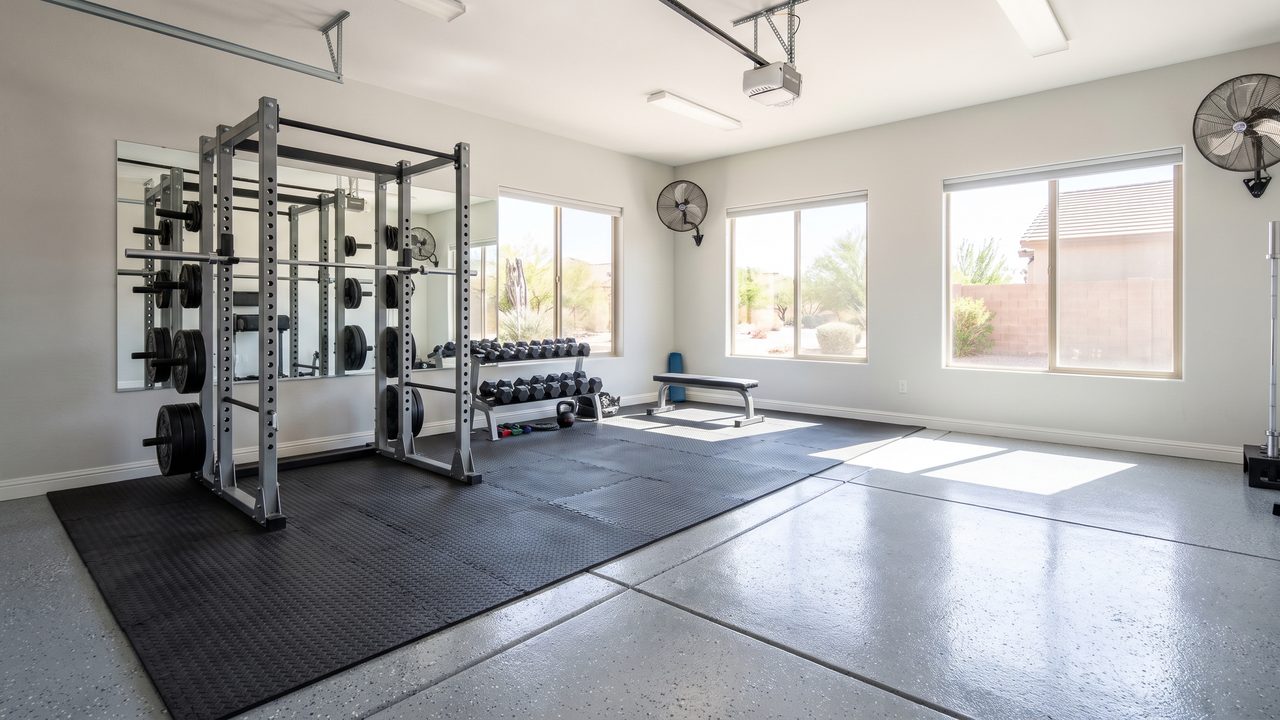
Converting a garage into a home gym or workshop is one of the most popular reasons Phoenix homeowners upgrade to an epoxy garage floor Phoenix system, and for good reason - bare concrete simply isn't built for the combination of heavy equipment, dropped weights, and daily chemical exposure that a serious multi-use garage sees.
This guide covers what makes epoxy a strong choice for a converted garage gym or workshop, how to choose the right system for your specific equipment and use, and the layout details that make a converted space actually functional day to day.
Home gym and workshop conversions surged across the Phoenix metro in recent years, and flooring is consistently one of the details homeowners underestimate going in - right up until they're standing on bare, dusty, stained concrete wondering why the space never quite feels finished.
Part of what drove the surge is straightforward: a converted garage is dramatically cheaper than a dedicated gym membership or a rented workshop space over time, and Phoenix's climate means the garage stays usable year-round with basic ventilation, unlike an uninsulated shed or an outdoor setup that becomes unbearable for months at a time. Once homeowners commit to the conversion, flooring quickly becomes the detail that determines whether the space feels like a real gym or workshop versus a garage with some equipment parked in it.
1. Why Epoxy Outperforms Rubber Mats and Bare Concrete
Epoxy outperforms both rubber interlocking mats and bare concrete for a converted garage because it creates a single seamless, easy-to-clean surface that resists stains and chemical exposure, while mats trap moisture and dust underneath and bare concrete absorbs oil, sweat, and spills permanently.
Rubber mats have their place - many homeowners layer them over epoxy specifically in a weightlifting drop zone - but as a standalone flooring solution they shift over time, trap debris at the seams, and don't hold up as well to rolling equipment like weight sleds or wheeled tool chests as a bonded epoxy surface does.
The Cleaning Difference Is Bigger Than It Sounds
A sealed epoxy floor wipes clean of chalk dust, sweat, and spilled pre-workout in seconds, while bare concrete absorbs those same substances into its porous surface permanently, building up a dingy, hard-to-remove residue over months of regular gym use. For a workshop, the same logic applies to oil, solvents, and metal shavings - an epoxy floor simply sweeps and wipes clean in a way raw concrete never fully does.
There's also a hygiene angle that matters more in a home gym than people initially expect. A garage gym used daily by multiple household members accumulates sweat and bacteria on any porous surface, and bare concrete or basic rubber mats both trap moisture at a level that a sealed epoxy floor simply doesn't allow. Homeowners converting a garage into a shared family workout space often cite this as a bigger factor in their decision than they expected going in, once they've actually lived with a sweaty gym floor for a season.
2. Choosing the Right System for Heavy Gym Equipment
The right system for heavy gym equipment depends on how serious the intended use is - a standard epoxy or polyaspartic system handles most home gym setups well, while dedicated powerlifting setups with regular heavy weight drops benefit from a thicker urethane cement flooring system that resists impact damage more effectively.
| Use Case | Recommended System | Why |
|---|---|---|
| Cardio, light dumbbells, general fitness | Standard epoxy or polyaspartic | Handles typical use without added cost |
| Serious powerlifting/heavy drops | Urethane cement + rubber mats | Best impact resistance for repeated heavy drops |
| Mixed gym + parking garage | Polyaspartic topcoat | Balances durability with vehicle traffic needs |
| Workshop with rolling tool chests | Standard epoxy or polyaspartic | Smooth, seamless rolling surface |
Squat racks and power racks themselves rarely damage a properly cured epoxy floor just from static weight-bearing - the concentrated load of rack feet is well within what a correctly installed system handles. The real risk comes from repeated impact, not static load, which is why the coating choice should be driven by how the equipment gets used, not just what equipment is present.
It's worth being specific with your installer about training style, not just equipment list. A homeowner who does controlled, slow eccentric lowering with every rep puts far less stress on a floor than one who regularly drops loaded barbells from full lockout - same equipment, very different real-world demands on the coating. Being upfront about this during the quote process helps the installer recommend a system that's genuinely matched to how the space will actually be used, rather than defaulting to a generic residential spec that may undersell what a serious lifter needs.
3. Workshop Considerations: Chemical and Impact Resistance
Workshop garages need a coating that resists a wider range of chemical exposure than a typical gym setup - motor oil, brake fluid, solvents, and paint thinner are all common in a home workshop, and not every coating system handles all of them equally well.
Standard epoxy and polyaspartic both resist common automotive fluids well when cleaned promptly.
Polyaspartic topcoats generally offer better solvent resistance than epoxy-only systems.
Both systems resist typical hand tool drops well; heavy machinery may warrant urethane cement.
Welding sparks or hot equipment feet need a designated heat-resistant mat regardless of coating.
For a commercial epoxy flooring-grade level of chemical resistance in a heavy-use home workshop, it's worth discussing your specific tool and chemical list with your installer rather than assuming a standard residential spec automatically covers it - a woodworking shop and an auto-repair-style workshop have genuinely different flooring needs.
4. Ventilation, Lighting, and Layout Tips for Converted Garages
A converted garage gym or workshop needs more attention to ventilation and lighting than the space typically got as a simple parking garage, since it's now a space people spend real time actively working or exercising in rather than just passing through.
- Ventilation: Adding a vent fan or improving airflow matters more in a converted space, especially for Phoenix's summer heat and any workshop chemical fumes.
- Lighting: Garage door openers and standard garage lighting are rarely sufficient for detailed workshop tasks or a properly lit gym mirror wall.
- Zoning: Defining a clear equipment zone versus a walking/storage zone with the epoxy's color or flake pattern helps keep a multi-use space organized.
- Electrical: Home gyms and workshops both tend to need more outlets than a standard garage wiring plan anticipates - plan this alongside the flooring, not after.
5. Maintaining a Multi-Use Garage Floor Long-Term
A converted garage floor needs slightly more attention than a standard parking-only garage simply because it sees more varied use - regular sweeping to remove chalk dust or metal shavings, prompt cleanup of any chemical spills, and periodic checks for wear in high-traffic equipment zones keep the floor performing well for years.
Our guide to maintaining epoxy floors in Arizona covers the general seasonal maintenance routine that applies to any Phoenix epoxy floor, though a converted gym or workshop should add equipment-specific habits on top of that baseline - wiping down under a squat rack after heavy sweat sessions, for instance, or sweeping metal shavings before they get tracked and ground into foot traffic areas.
How Long a Multi-Use Floor Actually Lasts
With reasonable care, a properly specified epoxy or polyaspartic system in a converted gym or workshop garage lasts comparably to one in a standard parking garage - our epoxy floor lifespan in Arizona guide covers realistic lifespan expectations by system type. The added equipment use doesn't dramatically shorten lifespan on its own; it's specifically impact damage from dropped weights or heavy tools, not general foot traffic or chemical exposure, that tends to be the limiting factor on a multi-use floor's longevity.
Homeowners who plan ahead for their specific equipment list before installation - rather than adding a power rack or welding station after the fact - consistently end up happier with the result, since the right system and layout decisions are far easier to make correctly the first time than to retrofit around an existing floor.
Budgeting for a Gym or Workshop Conversion Realistically
Flooring is usually just one line item in a full garage gym or workshop conversion, alongside mirrors, ventilation upgrades, additional electrical circuits, and the equipment itself. Homeowners planning the whole project at once often find it more cost-effective to sequence the flooring first, before any equipment or shelving is moved in, since installing epoxy around a fully set-up gym or workshop is considerably more disruptive and time-consuming than coating an empty space and moving equipment in afterward.
It's also worth thinking about resale value if there's any chance the home sells down the road. A well-executed epoxy floor reads as a genuine amenity to most buyers, whereas a garage cluttered with gym or shop equipment and unfinished bare concrete underneath can actually work against a listing. Buyers who don't want a home gym themselves can always remove equipment, but a nicely finished floor underneath signals a well-maintained home regardless of how the next owner intends to use the space.
Getting Multiple Household Members' Input Before You Commit
One detail that's easy to overlook: if more than one household member will use the converted space, it's worth getting everyone's input on layout and system choice before finalizing anything. A garage that needs to serve as both a serious lifting space for one family member and a woodworking shop for another has genuinely different flooring and layout needs than a single-purpose conversion, and sorting that out at the planning stage avoids compromises that frustrate someone every time they use the space.
6. Frequently Asked Questions
Plan Your Garage Gym or Workshop Floor
Get a free consultation matched to your specific equipment and use case.