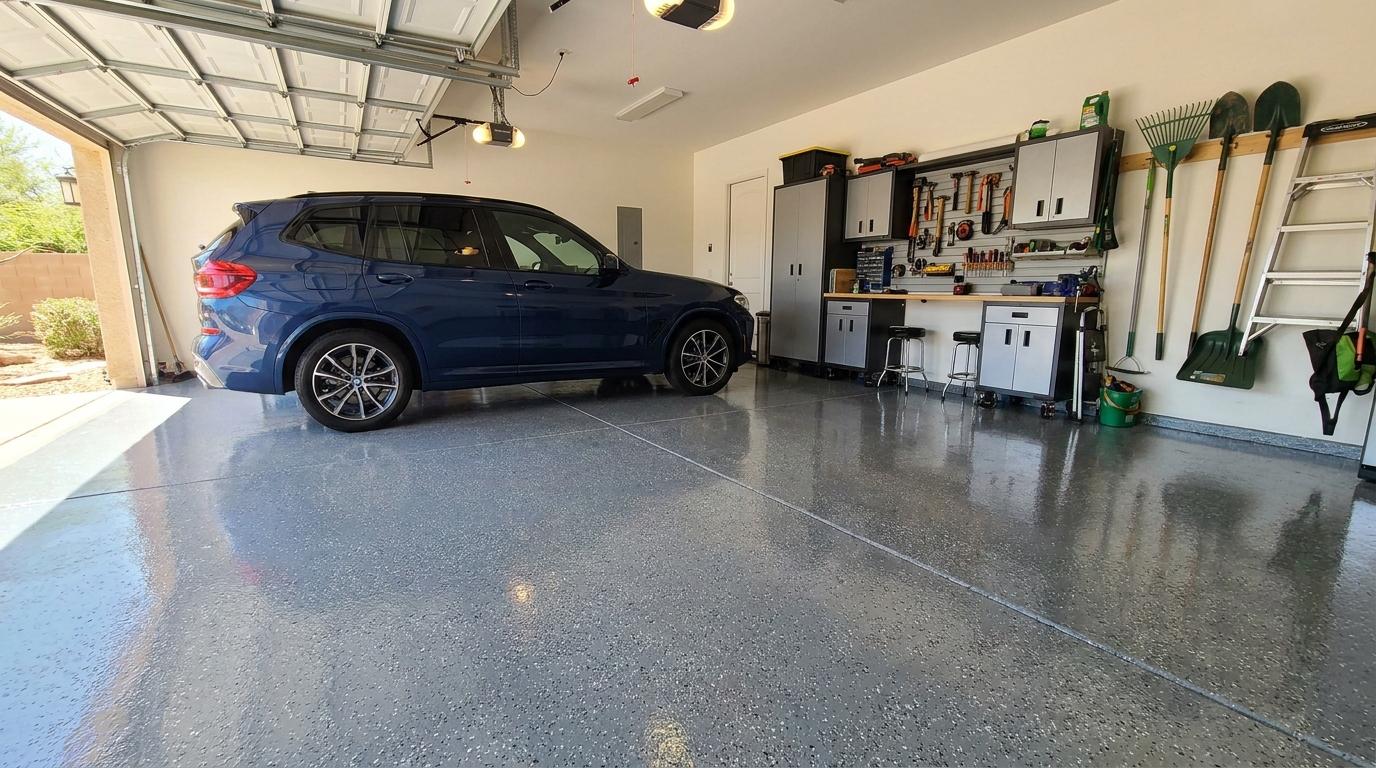
With the right system and proper installation, epoxy flooring lasts 15 to 20 years in Arizona homes and 8 to 12 years in commercial spaces that see heavier daily traffic. That's the direct answer - but the range you actually get depends heavily on which system is installed, whether it includes a UV-stable topcoat, and how it's maintained through the desert's brutal summers.
Why Arizona Is Harder on Epoxy Than Other States
Epoxy coatings perform beautifully in most climates, but Arizona throws a specific combination of stressors at them that few other states match:
- Intense UV exposure. Phoenix sees over 300 sunny days a year, and standard epoxy resin is not UV-stable. Without protection, UV rays break down the resin at a molecular level, causing amber discoloration and a chalky surface.
- Extreme surface temperatures. A garage or patio slab can hit 140–160°F in direct summer sun. Repeated heating and cooling cycles stress the bond between the coating and the concrete slab.
- Rapid thermal swings. Summer monsoon storms can drop surface temperatures 30–40 degrees in minutes, causing the coating and concrete to expand and contract at different rates.
- Low humidity and high UV together. This combination accelerates the natural aging process of unprotected resins far faster than in a coastal or northern climate.
Bottom line: A generic epoxy system rated for 15–20 years in Ohio might only deliver 7–10 years in Phoenix without the right topcoat and installation approach. System selection matters more in Arizona than almost anywhere else.
Lifespan by System Type
Not all epoxy floors are built the same, and the system you choose is the single biggest factor in how long it lasts under Arizona sun.
Standard aromatic epoxy without a UV-stable topcoat yellows and chalks under direct Phoenix sun. Bond may hold but the surface degrades fast.
Polyurethane adds abrasion and chemical resistance with modest UV improvement. Solid mid-tier option for garages with partial shade.
Our recommended Arizona system. UV-stable polyaspartic resists yellowing, hot tire pickup, and thermal shock better than any alternative.
Flake layer adds impact resistance and hides wear, extending practical lifespan further. Standard for high-traffic residential garages.
If you want to understand why polyaspartic outperforms standard epoxy in high-heat environments, the UV chemistry is explained in detail on our polyaspartic page.
What Shortens Lifespan in Arizona
Even a well-installed system can underperform if these conditions aren't addressed:
No UV-Stable Topcoat
This is the number one cause of premature failure we see in Phoenix-area floors. It's the critical differentiator between a floor that lasts 5 years and one that lasts 20. If your contractor can't tell you whether their topcoat is aliphatic, ask again - or call someone who can.
Skipped Moisture Testing
Slabs on grade in Arizona can still carry vapor pressure - even in our dry climate. Skipping a moisture vapor emission test before application leads to delamination and bubbling that no warranty language will fix after the fact.
Hot Tire Pickup
Tires that have been driving on 150°F+ asphalt can partially soften uncured or lower-grade coatings when parked, pulling up small sections of the surface. A proper polyaspartic topcoat handles this; budget roll-on kits don't.
Harsh Chemical Exposure
Pool chemicals, industrial solvents, and oil spills left sitting can degrade the topcoat over time. Clean up promptly and use pH-neutral cleaners for routine maintenance.
Skipping Maintenance
Grit and sand act like sandpaper under foot traffic and tires. In Phoenix, blowing dust after monsoon season means regular sweeping isn't optional - it's what keeps your floor's topcoat intact year after year.
How to Extend the Life of Your Epoxy Floor
A few consistent habits can push a floor toward the high end of its expected lifespan - or beyond it:
- Sweep and rinse regularly. Remove sand and grit weekly - especially after monsoon days. Abrasive particles under tire and foot traffic wear the topcoat faster than anything else.
- Clean spills promptly, especially oil, gasoline, and pool chemicals.
- Use a pH-neutral cleaner for mopping. Avoid vinegar, ammonia, or bleach-based products, which dull the topcoat over time.
- Park with care during peak summer heat. Letting tires cool for a few minutes before pulling into the garage reduces hot tire pickup risk on the hottest days.
- Refresh the topcoat around year 10. A professional recoat of the UV-stable polyaspartic topcoat resets surface wear and can extend total floor life well past 20 years. Far less expensive than a full tear-out and reinstall.
- Address chips or cracks quickly. Small damage left unrepaired can spread under thermal stress. See our epoxy repair page for how we handle spot repairs without redoing the whole floor.
ProEpoxy Warranty
Every ProEpoxy installation using our polyaspartic-topped system is backed by a written warranty covering delamination, peeling, and UV-related yellowing for the life of the coverage term. Residential installs are eligible for extended terms when paired with our recommended maintenance schedule. Because we only install UV-stable, Arizona-tested systems, we're able to stand behind our work in ways that generic or big-box epoxy kits cannot. Ask your ProEpoxy estimator for the specific warranty terms that apply to your project type and system selection.