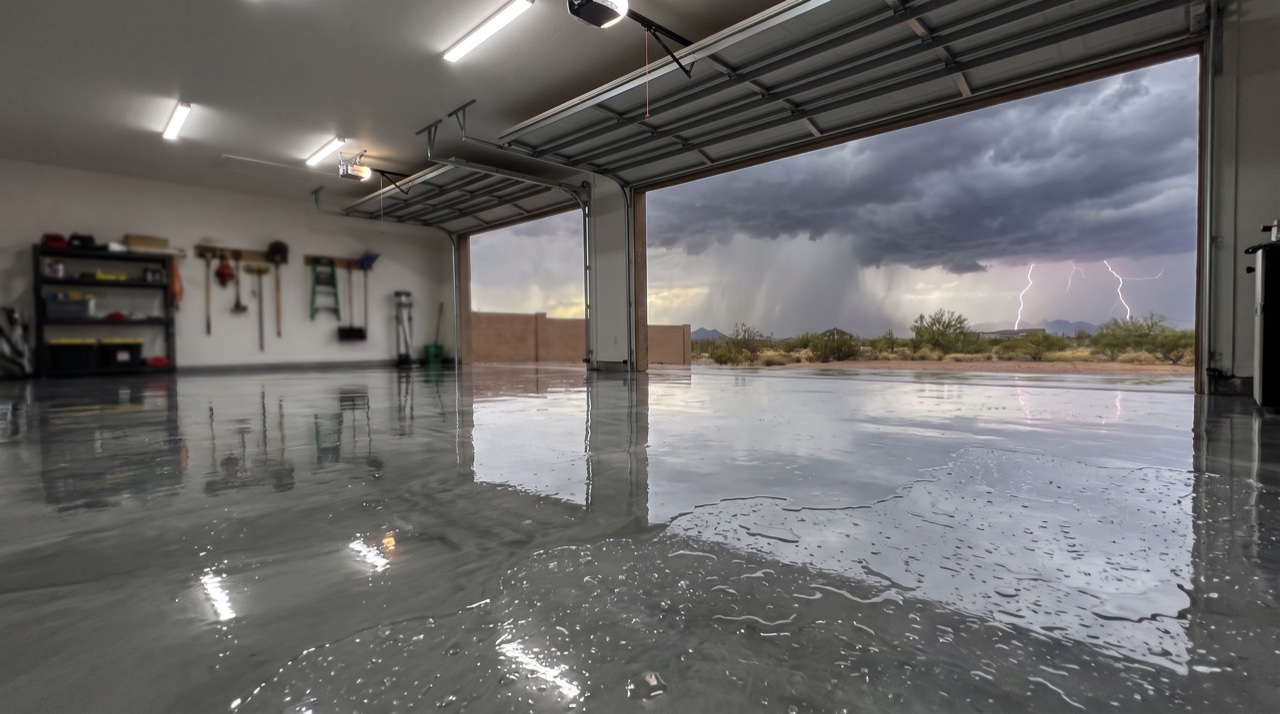
Short answer: Monsoon season (July–September) doesn't prevent epoxy installation - it requires scheduling adjustments. Cured epoxy actually handles monsoon water better than bare concrete. The risk window is during installation, not after.
Phoenix Monsoon Season: What Contractors Actually Track
Arizona monsoon runs June 15 – September 30 officially, with the most active period July–August. Here's what matters for epoxy installation:
| Factor | Monsoon Impact | Epoxy Relevance |
|---|---|---|
| Humidity | 30–60% (up from 10–20% in dry season) | Still within install range. Below 85% is acceptable for epoxy application. |
| Storm timing | Typically 3–9 PM, especially July–August | We complete base coats by noon. Topcoat scheduled morning after base. |
| Slab moisture | Elevated from soil saturation | MVT test required before every install. Vapor barrier added if needed. |
| Temperature | 95–110°F daytime during monsoon | Early morning start (6 AM) required regardless of monsoon or not. |
| Storm predictability | Low - can develop in 30 minutes | We watch NOAA hourly forecasts and stop application if probability exceeds 30%. |
Installation Windows by Season
Oct–April: Ideal
Cooler temperatures, low humidity (10–25%), zero storm risk. Most straightforward scheduling. October and November are peak months - high demand, book early. January–March excellent for large commercial jobs.
May–June: Hot but Dry
Very low humidity, no storm risk, but extreme heat (105–115°F). All installs start at 6 AM before slab temperature exceeds 90°F. Dust storms (haboob) can occur in May–June - same closure protocol as monsoon storms.
July–Sept: Monsoon Season
Workable with adjustments. Morning-only installation windows. Storm monitoring required. MVT testing mandatory. Lead times extend due to weather-day rescheduling. Expect 1–2 week longer booking windows.
What Happens if Rain Hits During Installation
Moisture hitting wet or curing epoxy causes several failure modes:
- Blushing: White haze on the surface from moisture reacting with amine-cured epoxy. Permanent aesthetic defect that requires grinding and recoating.
- Fisheyes: Small craters in the wet epoxy surface where water droplets landed. Requires sanding and additional coat.
- Adhesion failure: If heavy rain saturates the slab during the cure window, moisture can migrate up through the concrete and break the bond between epoxy and substrate. Results in delamination weeks or months later.
Our Protocol During Monsoon Season
We check NOAA radar hourly. If storm probability exceeds 30% in the afternoon window, we don't proceed with base coat that morning. We close garage doors at all times during cure. We do not install on slabs showing elevated moisture from recent rain saturation - always retest MVT after any significant storm event before scheduling.
Monsoon Water on Cured Epoxy: What Actually Happens
Once epoxy is fully cured, monsoon season is not a threat - it's actually when epoxy shows its advantages over bare concrete:
- Water beads and rolls off: Sealed epoxy surface repels water. Monsoon mud washes off easily - hose it down, squeegee, done.
- No staining from muddy runoff: Arizona monsoon brings red desert mud with iron oxide that stains bare concrete permanently. Epoxy resists this completely.
- No efflorescence: Bare concrete in Phoenix develops white calcium deposits after repeated wet/dry cycles. Epoxy seals the slab and prevents moisture wicking that causes efflorescence.
- Tire marks stay removable: Monsoon moisture softens tire marks that would otherwise bake on in summer heat. Easy to clean off sealed epoxy.
Elevated Slab Moisture After Monsoon Storms
Heavy monsoon rains (1–3 inches in an hour is common in Phoenix) saturate soil around foundations. This raises concrete moisture vapor transmission readings significantly:
- Normal Phoenix dry season: 1–2 lbs/1,000 sqft/24hr (well below the 3 lb threshold)
- During or after heavy monsoon event: can spike to 5–8 lbs/1,000 sqft/24hr
- We require readings to drop back below 3 lbs before proceeding - typically 1–2 weeks after a major rain event
- If a client's timeline requires installation during elevated moisture, we install a moisture vapor barrier (adds $400–$700 for a 2-car garage) before the epoxy base coat
Monsoon Season Epoxy FAQs
Get a Phoenix Epoxy Quote - Any Season
We work year-round, including monsoon season, with proper scheduling and moisture testing. Same-day quotes available.
Get My Free Quote(512) 555-0000