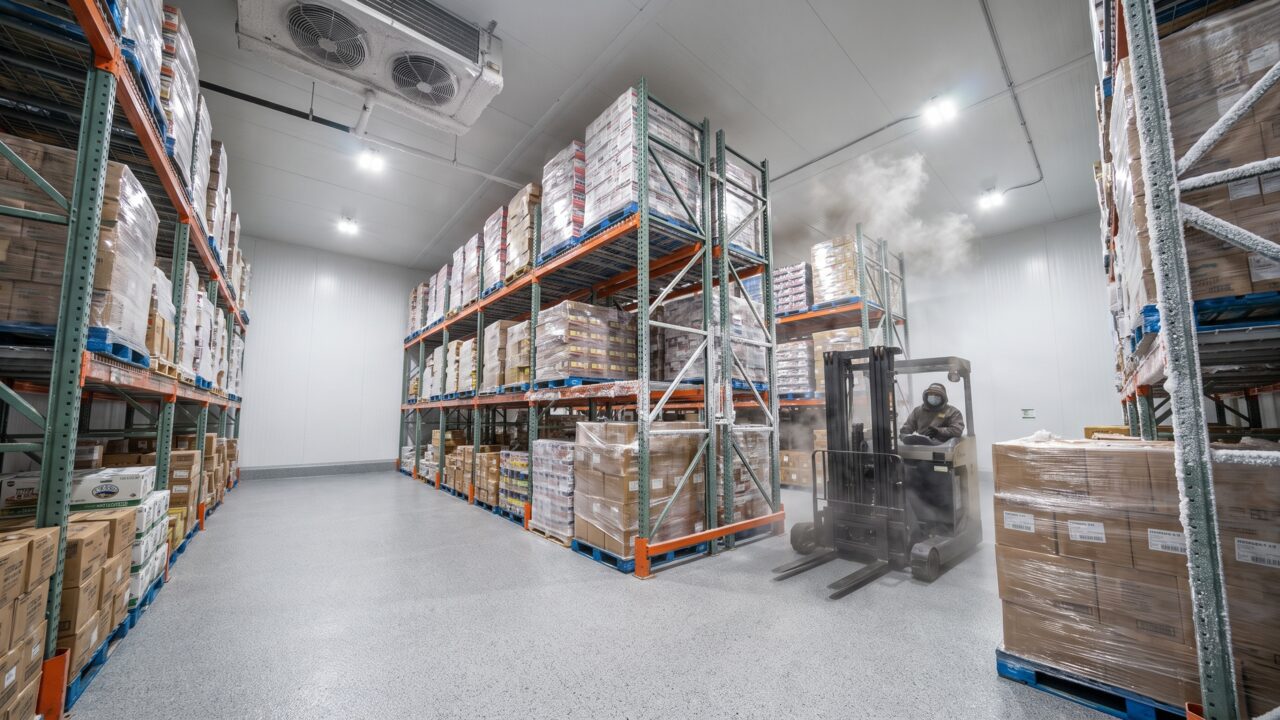
Cold storage and refrigerated distribution space is one of the fastest-growing categories in Phoenix's industrial market, and it demands a fundamentally different approach to warehouse epoxy flooring Phoenix facilities generally use - standard epoxy systems simply aren't engineered for the thermal stress a freezer or cooler floor experiences day after day.
This guide covers why cold storage floors need specialized coating systems, how thermal shock and condensation actually damage a standard coating, and what a properly specified system looks like for a Phoenix facility.
Metro Phoenix's cold storage inventory has grown substantially over the past several years, driven by both e-commerce grocery fulfillment and the broader food distribution network serving the Southwest. Much of this space sits in industrial parks originally built for general dry warehousing and later converted or expanded to include refrigerated capacity - a conversion history that makes flooring assessment especially important, since the original slab and any prior coating were likely never designed for the thermal demands the space now sees.
1. Why Cold Storage Floors Need Different Coating Systems
Cold storage floors need different coating systems because standard warehouse epoxy is formulated for a stable ambient temperature range, and the repeated expansion and contraction cycling a freezer or cooler slab experiences - sometimes multiple times a day as doors open and close, forklifts move between zones, and defrost cycles run - will crack or delaminate a standard coating over time.
A cooler holding product at 35-40°F sees moderate but real thermal cycling; a true freezer running at -10°F to 0°F sees dramatically more stress, especially at the door thresholds and dock interfaces where warm Phoenix ambient air meets sub-freezing conditions dozens of times per shift. The coating system has to be engineered specifically for this cycling, not simply a thicker version of a standard warehouse epoxy.
How This Differs From General Warehouse Assumptions
Facility managers coming from a general dry-goods warehousing background sometimes assume that a heavier-duty version of their existing epoxy - more coats, thicker application - will hold up in a converted cold storage zone. This is one of the most common and costly assumptions we see corrected during a Phoenix cold storage assessment. Thickness alone doesn't solve a thermal expansion mismatch between the coating and the substrate; the coating chemistry itself needs to be formulated for the temperature range, not just applied more generously.
2. Thermal Shock Resistance for Freezer/Cooler Transitions
Thermal shock resistance matters most at the transition zones - dock doors, pass-through openings, and staging areas - where a coating experiences the widest and most frequent temperature swings, and it's these zones, not the interior of the freezer itself, where standard coatings fail first.
| Zone | Typical Temp Range | Thermal Stress Level |
|---|---|---|
| Freezer interior (steady state) | -10°F to 0°F | Moderate - consistent, predictable |
| Dock door / transition zone | 0°F to 100°F+ swings | Highest - repeated rapid cycling |
| Cooler interior (steady state) | 35-40°F | Lower - narrower swing than freezer |
| Loading staging area | Variable, seasonal | Moderate - affected by Phoenix ambient extremes |
Urethane cement systems are the industry standard for the most demanding cold storage applications because their cement-based matrix has a coefficient of thermal expansion closer to concrete's own, reducing the internal stress that builds up as the slab and coating expand and contract at different rates during rapid temperature swings.
Forklift and pallet-jack traffic through these transition zones adds a mechanical stress layer on top of the thermal cycling - a coating that's brittle from cold exposure is far more prone to impact damage from a dropped pallet or a hard-cornering forklift than the same coating at ambient temperature. This is another reason urethane cement's added impact resistance, not just its thermal properties, makes it the preferred choice for the highest-traffic transition areas in a Phoenix cold storage facility.
3. Moisture and Condensation Management Below Freezing
Condensation forms wherever warm, humid Phoenix air meets a cold surface, and in a cold storage facility that means the floor at door thresholds and transition zones is under near-constant moisture exposure - a condition that will undermine an improperly detailed coating system over time even if the coating itself is otherwise well-suited to the temperature range.
The highest-condensation zone in most facilities; requires robust moisture barrier detailing and often a dedicated transition coating.
A cold slab can draw moisture vapor from the ground below, especially without a proper vapor barrier under the original concrete pour.
Automated defrost cycles release water that must drain properly - floor slope and drain placement matter as much as the coating itself.
Standing moisture that freezes creates a slip hazard and additional freeze-thaw stress directly on the coating surface.
Phoenix's own climate paradoxically compounds this issue: the region's high ambient humidity during monsoon season means more moisture-laden air is available to condense at a cold storage facility's transition zones during those months compared to the dry season, making proper detailing even more important here than in a consistently arid climate.
4. Approved Systems for Phoenix Cold Storage Facilities
Urethane cement and specially formulated cold-cure epoxy systems are the approved options for Phoenix sub-freezing cold storage applications, chosen based on the specific temperature range, chemical exposure, and impact resistance the facility requires.
Urethane cement, our urethane cement flooring system, handles the most extreme thermal cycling and is standard for true freezers, while a cold-cure epoxy formulation can be appropriate for coolers running above freezing where thermal stress is less extreme. For facilities with mixed zones - a freezer, a cooler, and an ambient staging area under one roof - different systems are often specified zone by zone rather than forcing one system to cover conditions it wasn't designed for.
5. Installation Challenges Unique to Refrigerated Spaces
Installing a cold storage floor coating is logistically more complex than a standard commercial epoxy flooring job because most systems require the space to be at ambient (non-refrigerated) temperature during application and initial cure, meaning the refrigeration system has to be shut down or the zone isolated for the duration of the project.
- Temperature ramp-up before install: A frozen slab needs to warm to an application-appropriate temperature before coating work can begin, which takes time and energy to manage properly.
- Product relocation: Any inventory stored in the affected zone needs to be moved to alternate cold storage for the duration of the project - a logistical challenge many facilities underestimate when scoping timeline.
- Cure time before re-cooling: The coating needs full cure at ambient temperature before the space can be brought back down to operating temperature, adding time to the total project window beyond just the application itself.
- Phased zone-by-zone work: For facilities that can't take an entire cold storage area offline at once, phased installation with temporary insulated barriers between zones keeps part of the facility operational throughout.
If your facility's cold storage floor already shows cracking or delamination from a prior undersized coating system, our epoxy floor repair team can assess whether a targeted repair or full system replacement makes more sense, and food-service-adjacent facilities weighing similar thermal and moisture concerns should also review our restaurant epoxy flooring guide for related walk-in cooler considerations.
Budgeting realistically for a cold storage install means accounting for both the coating cost itself and the operational cost of taking a zone offline - lost storage capacity, product relocation logistics, and potentially temporary rental cold storage if the facility can't absorb the affected inventory elsewhere during the project. A detailed on-site assessment that accounts for these operational factors, not just square footage and coating system, is what turns a rough budget number into an accurate project plan.
6. Frequently Asked Questions
Get a Cold Storage Flooring Assessment
Free consultation on the right system for your Phoenix freezer or cooler facility.