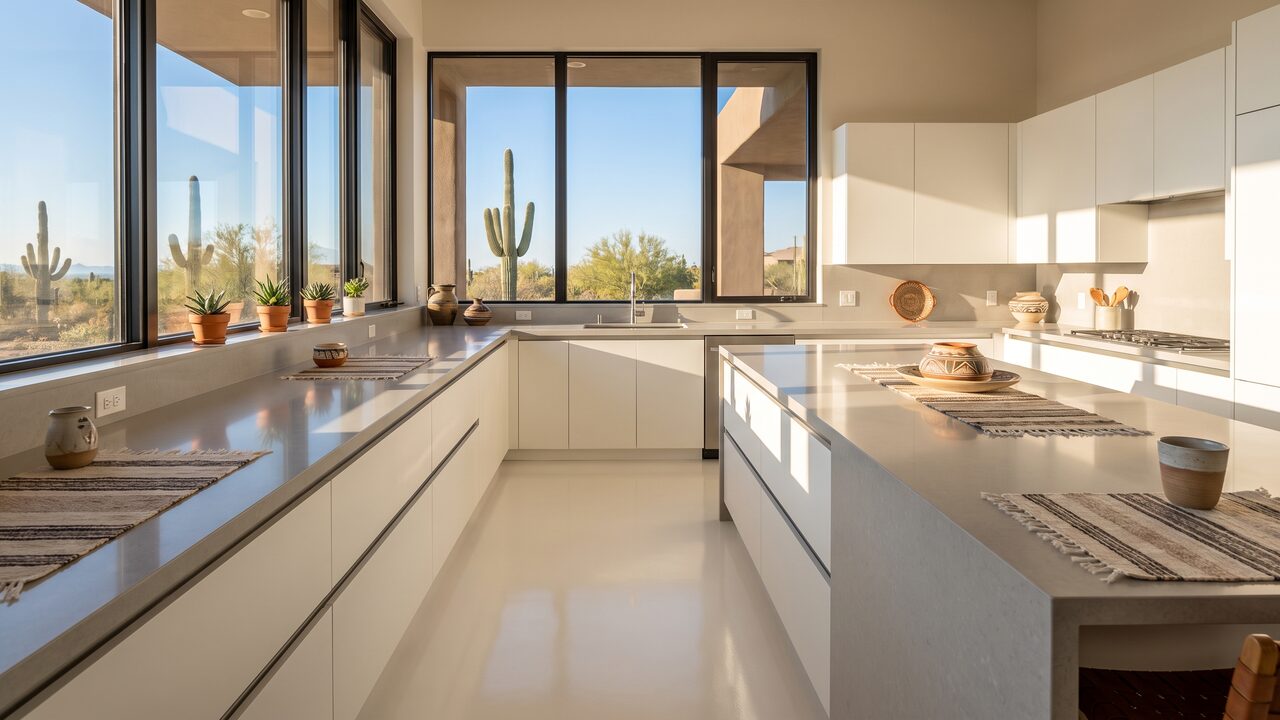
Epoxy floors are no longer limited to garages and warehouses. Phoenix homeowners are now extending residential epoxy flooring Phoenix systems into kitchens, laundry rooms, mudrooms, and basements - drawn by durability, seamless cleaning, and design flexibility that tile and hardwood cannot match in Arizona's demanding desert climate.
1. Why Interior Epoxy Is Trending in Phoenix Homes
Three Phoenix-specific factors are driving the move from tile and hardwood to interior epoxy:
- Grout line maintenance: Phoenix's ever-present fine desert dust and sand settle into tile grout lines and are nearly impossible to fully clean. Seamless epoxy eliminates grout entirely, reducing cleaning time and maintaining a fresh appearance in high-foot-traffic rooms.
- Water and moisture resistance: Phoenix's plumbing and appliances - dishwashers, washing machines, water heaters - occasionally leak. Tile grout absorbs moisture; epoxy is completely waterproof, preventing subfloor damage and mold growth.
- Heat tolerance: Phoenix summer heat means solar gain through south- and west-facing windows can raise interior floor temperatures significantly. Properly cured 100%-solids epoxy handles these temperatures without yellowing or softening, unlike many luxury vinyl products.
2. Kitchen Epoxy Floors: Seamless, Food-Safe, Durable
Kitchens are the most demanding interior epoxy application, combining hot liquids, cooking oils, foot traffic, and the need for a hygienic surface. The right system handles all of these when properly specified.
System selection for Phoenix kitchens: Use 100%-solids epoxy basecoat (minimum 15 mil DFT) with a UV-stable polyaspartic or polyurea topcoat. Standard two-part epoxy yellows in rooms with natural light - a UV-stable topcoat prevents color shift across Phoenix's 300+ sunny days per year. Matte and satin finishes at 30–60 gloss units hide fine scratches from foot traffic and pets better than high-gloss systems.
Surface prep: Kitchen concrete typically has adhesive residue from previous tile or hardwood. Diamond grinding to CSP 2–3 profile removes adhesive, opens pores for mechanical bond, and levels high spots. Proper prep adds 1–2 days but is the difference between a 10-year floor and a 2-year delamination.
Internal link: Concrete grind and seal Phoenix is an alternative for kitchens that want an exposed-concrete aesthetic with waterproofing but without full color coverage.
3. Laundry Room Epoxy: Waterproof Base, Vibration-Proof Bond
Laundry rooms in Phoenix single-family homes present specific technical demands that differ from garages and kitchens:
- Coved base detail: Water that overflows from washing machines, leaks from supply lines, or drips from high-efficiency machines must be contained. A coved epoxy base - radiused bead at the floor-wall junction, 4 inches up the wall - prevents water from wicking under the coating or into the wall cavity.
- Vibration resistance: Front-load washing machines on spin cycle generate significant vibration. Ensure the epoxy system is fully cured (minimum 72 hours before appliance reinstallation) and the concrete substrate is sound - loose or hollow concrete telegraphs vibration stress into the coating.
- Chemical resistance: Laundry detergent, bleach, and fabric softener contact. Use a chemical-resistant topcoat rated for laundry room use. Standard decorative epoxy topcoats can soften with repeated concentrated bleach exposure.
4. Utility Rooms and Mudrooms: Transition Zones
Utility rooms, mudrooms, and mechanical rooms adjacent to Phoenix garages or backyards are transition spaces that track in the most abrasive desert sand and grit. These rooms benefit from:
- Anti-slip aggregate broadcast (aluminum oxide or silica sand, 20–40 mesh) for safety when entering from exterior
- Darker color palettes (charcoal, slate, dark tan) that minimize visible dirt between cleanings
- Epoxy flake systems that add visual texture while hiding minor surface scuffs
Mudrooms are also good candidates for epoxy systems used in garages - the same quartz broadcast systems that resist hot tire pickup and chemical spills in garages perform equally well in interior transition zones.
5. Basement Epoxy Floors: Moisture Control in Desert Homes
Phoenix basements are less common than in cold-climate cities, but they exist in older homes and luxury properties. Basement epoxy floor Phoenix applications have a unique moisture consideration even in the desert: moisture vapor transmission (MVT) from below-grade concrete.
Concrete is permeable. Below-grade concrete in Phoenix transmits vapor even when the soil appears dry - irrigation from neighboring properties, seasonal water table shifts, and monsoon saturation all increase below-grade moisture. Before any basement epoxy installation, test for MVT using ASTM F2170 (in-situ relative humidity probes). If RH exceeds 75%, a moisture vapor barrier primer is required before topcoat application.
For basement entertainment rooms and home offices, satin or semi-gloss finishes with a decorative quartz broadcast create a comfortable, residential aesthetic while maintaining epoxy's durability advantage over carpet or laminate.
6. Finish Selection for Phoenix Interior Spaces
| Finish | Gloss Units | Best For | Maintenance |
|---|---|---|---|
| Matte | 10–25 GU | Bedrooms, offices | Shows dust; weekly wipe |
| Satin | 30–50 GU | Kitchens, laundry | Easy wipe; hides minor scratches |
| Semi-Gloss | 50–70 GU | Basements, gyms | Very easy clean; shows footprints |
| High Gloss | 80–95 GU | Showrooms, accent areas | Shows everything; daily wipe |
| Metallic / Decorative | 40–70 GU | Feature kitchens, lofts | Per topcoat type |
Phoenix homeowners frequently combine finishes: satin in kitchen work zones, semi-gloss in the adjacent dining area, with metallic epoxy flooring Phoenix as a decorative feature in open-plan entertainment spaces.
7. Cost Per Room: Phoenix Interior Epoxy Budget Guide
| Room / Area | Typical Size (sq ft) | Solid Color | Decorative System |
|---|---|---|---|
| Kitchen | 150–200 | $600–$1,200 | $1,200–$2,500 |
| Laundry Room | 50–80 | $350–$650 | $600–$1,100 |
| Mudroom / Utility | 60–100 | $350–$700 | $700–$1,300 |
| Basement (partial) | 300–500 | $1,200–$2,500 | $2,500–$5,000 |
| Basement (full) | 800–1,200 | $3,200–$5,500 | $5,500–$10,000 |
Laundry rooms with coved base details add approximately 20% to the base price. Multi-room projects (kitchen + laundry + mudroom) typically qualify for volume pricing that reduces per-square-foot cost by 10–15% compared to single-room installs.
8. Frequently Asked Questions
Free In-Home Epoxy Estimate
Room-by-room assessment, finish samples, and written quote for your Phoenix interior epoxy project.