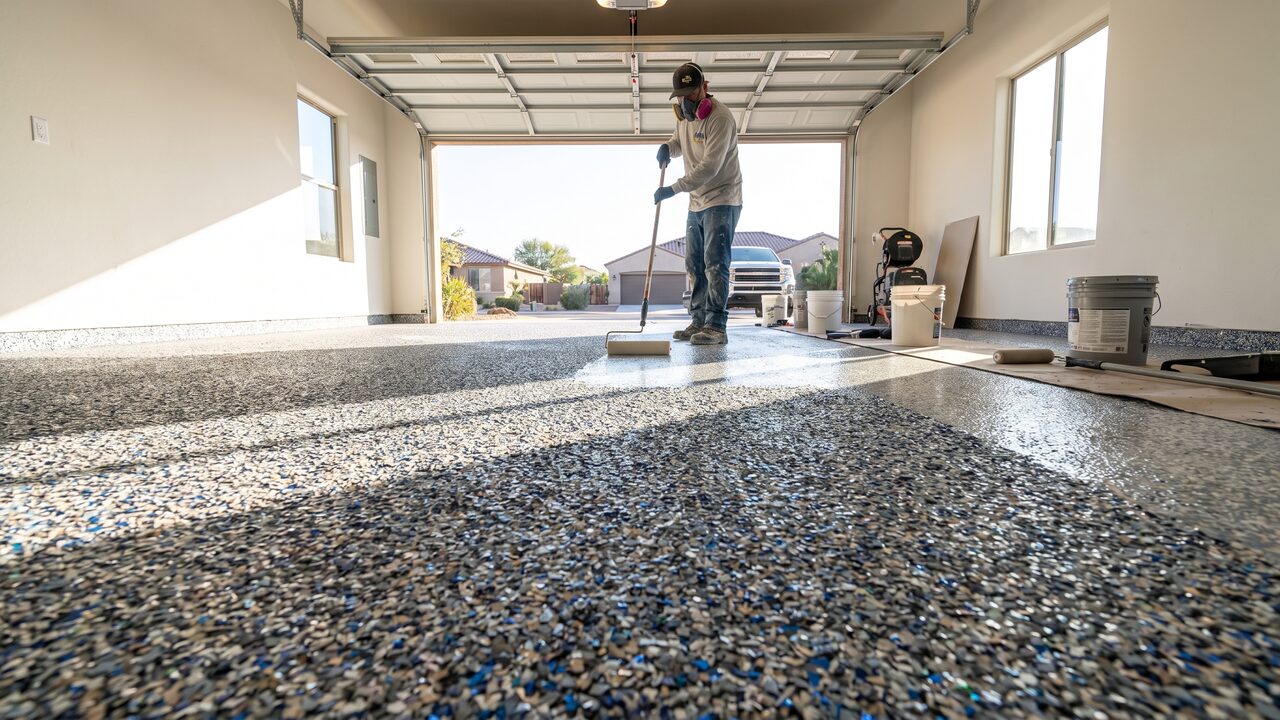
Not all epoxy is created equal - and nowhere does that matter more than Phoenix. Choosing the right epoxy garage floor Phoenix system means understanding how different chemistries perform against 150°F+ surface temperatures, intense UV, and monsoon humidity swings that most flooring products were never designed to survive.
1. Why Phoenix's Climate Makes Standard Epoxy Systems Fail
Epoxy products sold nationally are typically formulated and tested for moderate climates. Phoenix's combination of extreme surface heat, intense UV exposure, and dramatic daily thermal cycling exceeds the design tolerance of many standard epoxy products - leading to the hot tire pickup, yellowing, and premature cracking that plague so many Phoenix garage floors installed with the wrong system.
2. Water-Based Epoxy: The DIY Option That Struggles in Arizona
Hardware store epoxy kits use water-based formulations that are only 30–50% solids by volume - the remainder is water that evaporates during cure, leaving a thin residual film. In Phoenix heat, this thin film cannot withstand hot tire contact or abrasive foot traffic, leading to peeling and wear within 1–3 years even with careful DIY application. Water-based epoxy is not recommended for any Phoenix garage expecting more than a few years of service.
3. 100% Solids Epoxy: The Professional Standard and Its Limits in Phoenix
100%-solids epoxy deposits its entire volume as cured coating - no water or solvent evaporation - producing a film 3–5 times thicker and substantially harder than water-based alternatives. This is the professional baseline for Phoenix installations. Its limitation: standard 100%-solids epoxy alone still softens above 130–140°F, which Phoenix garage floors regularly exceed in direct summer sun through an open door or west-facing exposure - hence the need for a heat-resistant topcoat layer.
4. Polyaspartic Systems: The Best-Fit for Phoenix Garages and Why
| System | Heat Tolerance | Cure Speed | UV Stability |
|---|---|---|---|
| Water-Based Epoxy | Poor (softens ~110°F) | Slow (24-72hr) | Poor - yellows fast |
| 100% Solids Epoxy | Moderate (~130-140°F) | Moderate (24hr) | Moderate w/ topcoat |
| Polyaspartic | Excellent (300°F+) | Fast (1-24hr) | Excellent |
Polyaspartic's aliphatic chemistry maintains hardness and color stability at temperatures far beyond what standard epoxy tolerates, making it the ideal Phoenix-specific solution - either as a standalone commercial system or as the topcoat in a hybrid residential system. See our polyaspartic floor coating and polyurea coating guides for deeper chemistry comparisons.
5. Hybrid Systems: Epoxy Base + Polyaspartic Topcoat - The ProEpoxy Standard
The best Phoenix residential garage solution combines both chemistries: a 100%-solids epoxy base coat (which holds decorative flake or quartz broadcast better than polyaspartic alone) topped with a polyaspartic or polyurethane clear coat for heat, UV, and chemical resistance. This hybrid approach delivers full decorative flexibility with climate-appropriate durability - the system ProEpoxy installs on the large majority of Phoenix residential garages.
6. Choosing Your Decorative Option: Solid, Flake, Metallic, or Quartz
Clean, uniform appearance. Budget-friendly. Shows dirt and tire marks more than textured options.
Most popular Phoenix choice - hides imperfections, adds texture, wide color range.
Dramatic swirled color effect. Best for showcase garages. Requires skilled application.
Heaviest-duty decorative option. Excellent for high-traffic or commercial-adjacent garages.
7. What to Ask Your Phoenix Contractor About Their System
- "Can I see the product data sheet (PDS) for the base coat and topcoat?"
- "What is the solids content of the base coat?" (Should be 100% for body coat)
- "What temperature rating does the topcoat carry?"
- "Do you perform moisture vapor testing before installation?"
- "Do you use diamond grinding or acid etching for surface prep?"
Any contractor unable to answer these clearly, or unwilling to provide a PDS, should be disqualified from consideration for a Phoenix installation. See our epoxy flake system and metallic epoxy guides for decorative option deep-dives.
8. Frequently Asked Questions
Free System Recommendation
On-site assessment and product data sheets for the right system for your Phoenix garage.