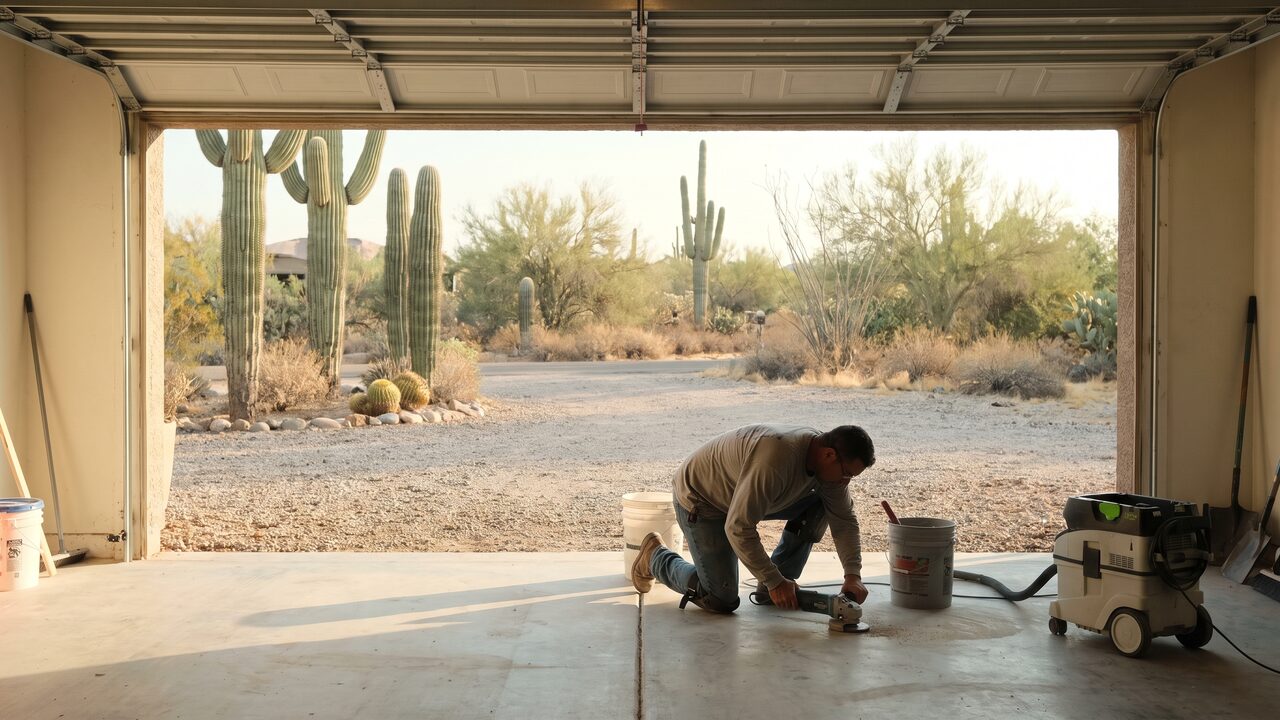
Fall is the best window of the year to install an epoxy garage floor Phoenix homeowners will get the most out of - cooler slab temperatures mean faster, cleaner cures and fewer application headaches than a mid-summer job. Every September, our installers watch bookings climb as homeowners who postponed their garage project through the 100°F+ months finally get on the schedule, and the crews that fill up first are the ones with September and October dates already locked in.
This guide walks through exactly why the fall window works so well in the Valley, how it compares to booking in summer or the depths of winter, and what a homeowner should have ready before our crew shows up - so you can plan a 2026 install with confidence instead of guessing at timing.
1. Why Fall Beats Summer for Phoenix Garage Epoxy Installs
Fall beats summer for a Phoenix epoxy garage floor install because slab surface temperatures finally drop into the range epoxy and polyaspartic resins are formulated for, instead of the 120°F+ readings a west-facing garage slab can hit in July and August direct sun.
Concrete garage slabs in Phoenix routinely exceed 100°F at the surface during peak summer afternoons, even with the garage door closed. That heat accelerates the chemical reaction in two-part epoxy resins, shortening pot life and increasing the risk of visible lap lines, bubbling, and an uneven finish. By late September, morning and evening slab temperatures settle into a far more workable range, giving our crews a longer application window each day and a more predictable, uniform result.
There's also a humidity story that matters as much as the temperature one. Phoenix's monsoon season runs roughly June through September, and the spikes in ambient moisture during a storm cell can interfere with epoxy's chemical cure, occasionally producing a hazy or blush-like surface film. Once monsoon activity tapers off in late September and October, Phoenix returns to its normal low-humidity desert pattern - arguably the single best combination of moderate temperature and dry air anywhere on our fall installation calendar. That's a big part of why an epoxy garage floor Phoenix crew schedules so many jobs in this specific eight-to-ten week stretch.
How This Compares to a Spring Install
Spring (March through May) is Phoenix's other moderate-temperature season, and some homeowners ask whether it's just as good as fall. Early spring performs similarly to October, but by late April and May, slab temperatures are already climbing back toward summer levels - narrowing the workable window again just as quickly as it opened. Fall's advantage is that the cooling trend holds steady for two to three full months instead of a few weeks, giving both homeowners and installers far more flexibility on scheduling.
2. Cooler Cure Temperatures and Faster Turnaround
Cooler fall temperatures let each coat of a Phoenix garage epoxy system cure fully and evenly, which shortens the total project timeline compared to a summer install fighting flash-curing and off-gassing.
In extreme heat, epoxy can begin curing before it's fully leveled and squeegeed into the substrate, trapping air and creating a textured or pitted surface - a defect called flash-curing. Polyaspartic topcoats are more heat-tolerant than standard epoxy but still perform best within their manufacturer-rated application window. Here's how the two most common systems compare across a typical Phoenix seasonal cycle:
| Season | Typical Slab Surface Temp | Epoxy Working Window | Recoat Risk |
|---|---|---|---|
| Summer (Jun–Aug) | 100–130°F+ | Narrow, early AM only | Elevated - flash-cure, bubbling |
| Fall (Sep–Nov) | 65–95°F | Extended, most of the day | Low - full, even cure |
| Winter (Dec–Feb) | 45–70°F | Midday only, may need heaters | Moderate - slow cure below 50°F |
| Spring (Mar–May) | 70–100°F | Good, narrowing by May | Low–moderate |
Most epoxy and polyaspartic systems are rated for application between roughly 50°F and 95°F substrate temperature - a range fall in Phoenix hits reliably for weeks at a stretch, unlike summer where that window can shrink to just the first hour or two after sunrise.
Epoxy vs. Polyaspartic: Which Cures Better in Fall?
Standard epoxy systems benefit the most from fall's moderate temperatures, since epoxy resin is more sensitive to heat-driven flash-curing than polyaspartic. Polyaspartic floor coating is engineered with a faster, more heat-tolerant chemistry and performs well even in summer, but it still cures cleaner and more predictably in fall's cooler, drier air. For homeowners choosing between the two purely on a seasonal basis, fall narrows the practical performance gap between epoxy and polyaspartic - both systems are working in their ideal range, so the decision comes down more to budget, gloss preference, and how quickly you need the garage back in service.
3. Scheduling Around Phoenix's September-October Weather
September and October in Phoenix bring average highs in the high-80s to upper-90s with markedly cooler mornings, which is exactly the working pattern our installers plan around: floor prep and grinding in the cooler early hours, coating application once the garage has stabilized, and cure time overnight when temperatures drop further.
September can still carry the tail end of monsoon season, so we track humidity and any storm activity closely - high ambient moisture can slow epoxy cure and, in rare cases, cause amine blush on the surface. By mid-October, monsoon risk drops off almost entirely and Phoenix settles into the driest, most stable stretch of the year for coating work, which is why late October and November dates are typically our fastest-curing, cleanest-finish installs of the whole calendar.
- Early September: Monsoon tail-end possible - we monitor forecasts and may shift a scheduled day by 24-48 hours for a dry install window.
- Late September–October: The sweet spot - low humidity, moderate temperatures, longest working windows of the year.
- November: Cooling further, still excellent for coating work, with cure times often running a day faster than late summer installs.
Our project leads check the extended forecast a few days before every scheduled fall install and will proactively call to shift a start time if a monsoon cell or unseasonable heat spike is tracking toward your install date. Because we control our own crews and don't subcontract labor out, we can usually offer an alternate day within the same week rather than pushing your project weeks out - something worth asking about when comparing Phoenix epoxy contractors.
4. What to Prep Before Your Fall Install Date
Preparing for a fall epoxy garage floor install in Phoenix mainly means clearing the space completely and giving our crew unobstructed access to the full slab, since the coating and cure schedule depends on an uninterrupted multi-day window.
- Empty the garage completely - vehicles, storage shelving, and anything stored directly on the floor needs to be out before grinding begins.
- Check for existing oil stains or coatings - deep-set stains or a failing prior coating may add a degreasing or grinding step; flagging this ahead of time keeps your install day on schedule.
- Plan your parking - most fall installs need the garage clear for 3-5 days from grinding through final cure, so plan driveway or street parking for that stretch.
- Confirm your color and finish - choosing between a solid color, flake broadcast, or metallic epoxy finish ahead of your install date avoids delays on the day crews arrive.
- Ask about a same-day polyaspartic option - if you need the garage back fast, our polyaspartic floor coating systems cure quicker even during the fall season and are worth discussing at your estimate.
- Keep pets and kids out of the garage - fumes from grinding and coating dissipate within a day or two, but the garage should stay off-limits to pets and children until your crew confirms it's cured.
- Note any wall-mounted storage or cabinetry - if you're planning slat-wall or cabinet systems along with your floor, mention it up front so base coving and edge work can be coordinated around it.
5. Locking In 2026 Pricing Before Year-End
Booking your Phoenix garage epoxy install during the fall season locks in current 2026 pricing before materials and labor costs typically adjust heading into the new year, and it also secures a slot before the season's busiest weeks fill up.
Fall is consistently our highest-demand season - homeowners who put off their garage all summer, plus buyers wrapping up projects before the holidays, both compete for the same install dates. Crews booking 3-4 weeks out is normal by late September, and popular finishes like epoxy flake system colors can sell out of a particular blend during peak weeks. If a fall date matters to you, getting a written estimate now is the single best way to protect both your preferred timeline and this year's pricing.
If your existing garage floor already has a coating that's chipping, peeling, or lifting at the edges, it's also worth having it assessed before a fresh install - our epoxy floor repair team can determine whether a spot repair or a full grind-and-recoat makes more sense as part of your fall project.
Pricing on a two-car garage typically scales with the finish you choose: a solid-color 100%-solids epoxy sits at the lower end, a full epoxy flake system with broadcast chips runs in the mid-range, and a metallic epoxy finish with its multi-coat application process is the premium option. A free on-site estimate is the only accurate way to price your specific garage, since slab condition, square footage, and any existing coating removal all factor into the final number - and locking that number in during fall means it holds through your install date rather than being subject to a new-year materials adjustment.
6. Frequently Asked Questions
Book Your Fall Install Date
Get a free on-site estimate and lock in a September or October install slot before the season fills up.