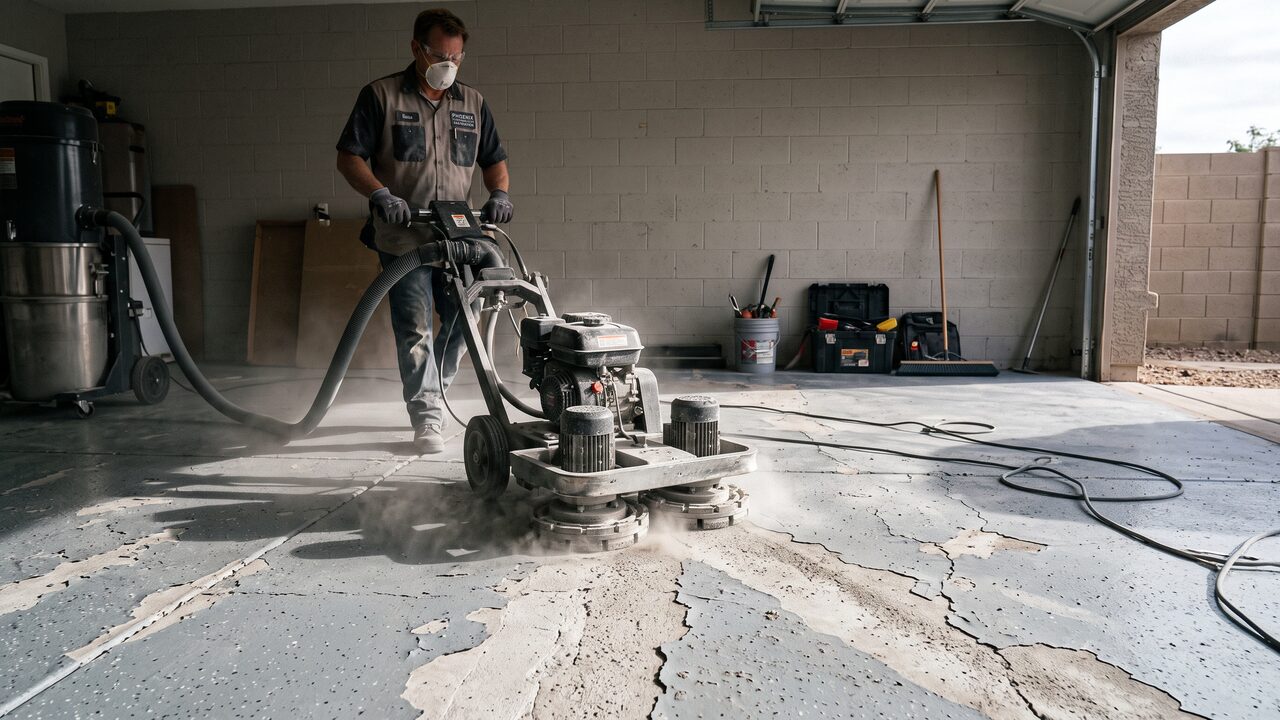
Delamination - where the epoxy coating separates from the concrete substrate or from another layer within the system - is among the most misdiagnosed epoxy floor repair Phoenix problems. Homeowners often assume any peeling epoxy needs full removal, while some contractors wrongly recommend a quick recoat over the problem. Neither assumption is reliable - the correct fix depends on how much delaminated, and which layer failed.
1. What is Delamination and Why Phoenix Floors Are Prone to It
Delamination occurs when the bond between two layers of a floor system fails - either between the epoxy and the concrete substrate, or between coating layers within a multi-coat system. Unlike surface wear or scratching, delamination is a structural adhesion failure that will spread under continued traffic and thermal stress if left unaddressed.
Phoenix floors face elevated delamination risk due to extreme thermal cycling (80°F+ daily surface temperature swings), moisture vapor from below-grade slabs, and - most commonly - inadequate surface preparation at the time of original installation. Diamond grinding to open the concrete's pore structure is essential for mechanical bond; shortcuts here are the leading cause of Phoenix delamination.
2. Sounding Test: Finding Delamination Before It Spreads
Delamination often begins invisibly beneath an intact-looking surface before any visible peeling appears. The sounding test - tapping the floor with a rubber mallet or solid metal rod - reveals hidden separation:
- Solid thud: Good adhesion, coating firmly bonded to substrate below.
- Hollow or drum-like sound: Air gap or separation present - the coating has debonded from what's below it, even if the surface still looks intact.
Systematically tap the entire floor in a grid pattern, marking hollow areas with tape or chalk. This map determines whether the problem is isolated (a few small areas) or widespread (requiring different repair strategy), and gives a contractor precise information rather than a vague "it's peeling somewhere."
3. Layer Analysis: Which Layer Failed and Why It Matters for Repair
Entire coating system separates from bare concrete - usually caused by inadequate surface prep (no grinding, or grinding too light) or moisture at time of install.
New topcoat separates from an older, glossy or contaminated base coat - common when a recoat is applied without properly abrading the existing surface first.
Moisture vapor pressure builds beneath the coating and pushes it away from the substrate - often appears as raised bubbles before full delamination.
Identifying which layer failed tells the contractor whether the fix requires full removal to bare concrete or only removal down to a sound intermediate layer - a meaningful cost difference.
4. Recoat vs Regrind: The Decision Matrix for Phoenix Floors
| Situation | Correct Action | Why |
|---|---|---|
| Any visible delamination present | Diamond grind affected area to bare concrete | Recoating over delamination guarantees repeat failure |
| Less than 20% of floor affected | Spot regrind and patch repair | Cost-effective, matches surrounding finish if planned well |
| More than 20–25% of floor affected | Full floor regrind and recoat | Multiple spot repairs cost more and look patchy vs full recoat |
| Floor otherwise sound, just dull/scratched | Simple recoat (no delamination present) | No adhesion problem - cosmetic recoat is appropriate here |
5. Partial Regrind: Addressing Isolated Delamination Without Full Floor Removal
When delamination is confined to isolated areas (under 20% of total floor area), partial regrind repair is the most cost-effective approach. The process: diamond grind the affected area down to bare concrete with a feathered edge into the surrounding sound coating, prime and rebuild the system in that zone, then blend the new topcoat into the existing floor.
Color and sheen matching require experience - a well-executed partial repair on a solid color or subtle pattern is nearly invisible, while decorative flake or metallic systems are more difficult to blend seamlessly and may show a visible repair boundary.
6. Preventing Future Delamination: Proper System Specification for Phoenix
The best delamination repair is the one you never need. Proper original installation prevents nearly all delamination:
- Diamond grinding, not acid etching: Mechanical profile (CSP 2–3) provides far superior bond compared to chemical etching alone.
- Moisture testing before coating: ASTM-standard MVT testing catches moisture problems before they cause bond failure.
- Correct cure time between coats: Rushing recoat windows in Phoenix heat can trap solvents or create weak intercoat bonds.
- Quality control on mix ratios: Off-ratio epoxy mixing is a less common but real cause of adhesion and cure failures.
See our garage epoxy floor and commercial epoxy guides for proper installation specifications that prevent delamination from occurring in the first place.
7. Getting a Repair Quote for Phoenix Epoxy Delamination
A proper delamination repair quote should include: a sounding-test map of the affected area, layer analysis explaining what failed, a recommendation for spot repair vs full regrind based on percentage affected, and a written warranty covering the repaired area. Avoid any contractor offering to recoat over delaminated sections without grinding - this is a guaranteed repeat failure and a red flag for corner-cutting.
8. Frequently Asked Questions
Free Delamination Inspection
On-site sounding test and written repair recommendation for your Phoenix epoxy floor.