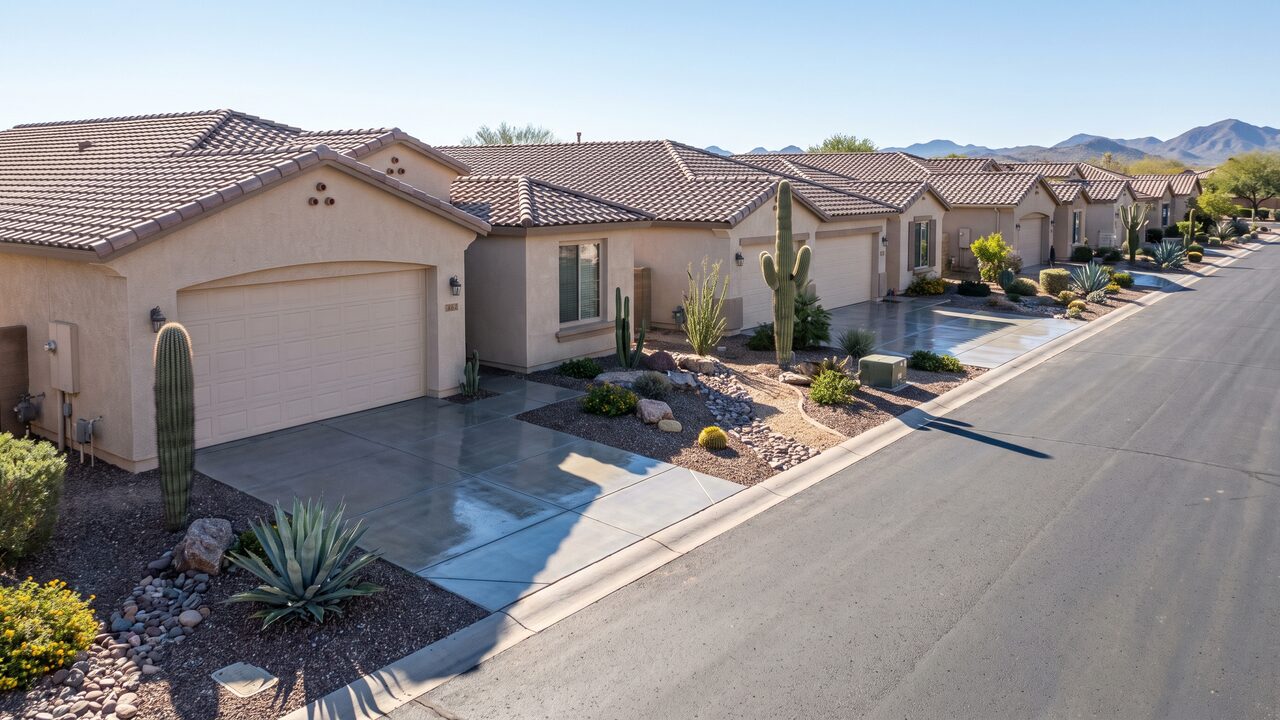
Before you can move forward with a concrete polishing Phoenix driveway project in most planned communities, there's a step that catches many homeowners by surprise: HOA architectural review approval. Skipping this step - or assuming a driveway finish doesn't count as an exterior modification - is one of the most common reasons a Phoenix homeowner ends up with a costly violation notice after the work is already done.
This guide walks through why HOAs regulate driveway finishes at all, what a typical approval request needs to include, and realistic timelines so you can plan your polishing project around the review process rather than around it becoming a surprise delay.
We've supported HOA submissions for homeowners across dozens of Phoenix-metro associations, from tightly controlled North Scottsdale communities to more relaxed Phoenix-proper neighborhoods, and the process is genuinely manageable once you know what to expect - the homeowners who run into trouble are almost always the ones who either skip the review entirely or submit an incomplete request without realizing what their specific association wants to see.
1. Why HOAs Regulate Driveway Finishes in Phoenix Communities
HOAs regulate driveway finishes because a community's architectural guidelines exist specifically to maintain a consistent visual standard across every home, and a driveway is one of the most visible exterior surfaces on any property - often the first thing a neighbor or passerby notices.
Phoenix's master-planned communities, especially newer developments in Scottsdale, Chandler, and Gilbert, tend to have particularly detailed architectural guidelines covering everything from paint colors to landscaping to hardscape finishes. Polished concrete's gloss level and color options fall squarely within what most of these associations classify as an exterior modification requiring review, even though it's technically the same base material (concrete) the driveway already consists of.
Why This Surprises So Many Homeowners
The confusion is understandable: polishing existing concrete doesn't add a new material, change the driveway's footprint, or require a permit from the city in most cases, so it's easy to assume it falls outside what an HOA would care about. But most CC&Rs define "exterior modification" broadly enough to cover any visible change to a home's exterior appearance, including finish and sheen changes to existing hardscape - which is exactly what a polish transformation is. Reading your specific community's governing documents, rather than assuming based on what other types of home improvements do or don't require review, is the only reliable way to know for certain.
2. Common HOA Requirements for Polished Concrete
Most Phoenix HOAs reviewing a polished concrete driveway request want to see specific documentation confirming the finish will match the community's approved aesthetic standards before granting approval.
| Typical Requirement | Why It's Requested |
|---|---|
| Color/dye sample | Confirms the final color falls within community-approved palette |
| Sheen/gloss level specification | Some associations restrict high-gloss finishes visible from the street |
| Site plan or driveway scope diagram | Shows exactly which areas will be polished, especially for partial-driveway projects |
| Contractor licensing/insurance info | Some HOAs require proof of a licensed, insured contractor before approving work |
Requirements vary meaningfully between associations - a Scottsdale master-planned community with strict design review may require far more documentation than a smaller, less formal Phoenix-metro HOA, so checking your specific community's CC&Rs (Covenants, Conditions & Restrictions) before submitting is worth the time.
Some Phoenix associations also specify a required minimum setback or restrict polished finishes to certain areas of the driveway visible from the street, while allowing more flexibility on sections closer to the garage. If your community falls into this category, clarifying the exact boundary of what's regulated before finalizing your project scope with a contractor avoids a mismatch between what gets approved and what gets built.
3. Submitting an Architectural Review Request
Submitting an architectural review request typically means completing your HOA's standard modification request form, attaching supporting documentation (color samples, contractor info, site plan), and submitting it to the association's architectural review committee or management company ahead of your desired install date.
- Request the form early - most HOA management companies or community websites have a standard architectural modification form; requesting it as soon as you're considering the project avoids delay later.
- Attach a physical or photo color sample - a printed color swatch or clear photo reference is far more useful to a review committee than a verbal description.
- Note the sheen level explicitly - since gloss level is a common point of HOA concern, stating it clearly (satin, semi-gloss, high-gloss) upfront avoids a follow-up request that delays approval.
- Confirm submission receipt - many associations acknowledge receipt in writing; keep this for your records in case a timeline dispute arises later.
- Check for a review fee - some associations charge a small architectural review or application fee; confirming this upfront avoids a surprised delay if the fee wasn't included with your initial submission.
4. Typical Approval Timeline and What Can Delay It
Most Phoenix HOA architectural review committees respond to a driveway modification request within 2-4 weeks, though associations that only meet monthly rather than reviewing requests on a rolling basis can push that timeline out further depending on when in the month your request lands.
Missing color samples or an unclear scope description is the most common cause of a delayed or bounced-back request.
Some smaller associations review requests only at a monthly board meeting rather than on a rolling basis - check your community's review cadence before assuming a 2-week turnaround.
A color or sheen falling outside the association's typical approved range may trigger additional review or a request for a revised submission.
Fall is a popular season for exterior projects across Phoenix, so architectural committees can see a higher volume of requests during this window.
Building HOA review time into your project timeline from the start - rather than assuming installation can happen the week you decide to move forward - is the single best way to avoid a scheduling conflict with your concrete polishing Phoenix contractor.
A practical rule of thumb: submit your HOA request before booking a firm installation date with your contractor, not after. Homeowners who lock in an install date first and then discover their HOA needs an extra board meeting cycle to approve the request often end up either forfeiting a deposit on a cancelled slot or scrambling to find a new date that fits the delayed approval - both avoidable by simply sequencing the two steps in the right order.
5. Working With ProEpoxy on HOA Documentation
We provide the documentation Phoenix homeowners need to support an HOA architectural review request as a standard part of the estimate process, including color samples, sheen specification, and a scope diagram when your association requires one.
Because we've worked with homeowners across many different Phoenix-area associations, we can often tell you upfront whether a specific finish choice is likely to sail through review or whether it's the kind of request that tends to draw follow-up questions from a stricter committee - useful information before you fall in love with a specific gloss level that your particular HOA has historically pushed back on. If your project also touches areas like a stained concrete patio or you're weighing concrete grind and seal as an alternative finish for part of the property, we can help scope documentation for the full project at once rather than submitting piecemeal requests. Homeowners in Scottsdale epoxy flooring communities in particular should expect a more detailed review process given how design-focused many North Scottsdale associations are.
If your submission does draw a follow-up question from the review committee - a request for a slightly darker sample, or clarification on where the polished section ends - we can typically turn around a revised document within a day or two rather than making you wait for a full new estimate cycle. Keeping that turnaround fast is often the difference between a project that stays on your original timeline and one that slips into the next board meeting cycle.
6. Frequently Asked Questions
Get HOA-Ready Documentation
Free quote plus the color samples and scope documentation your HOA needs.