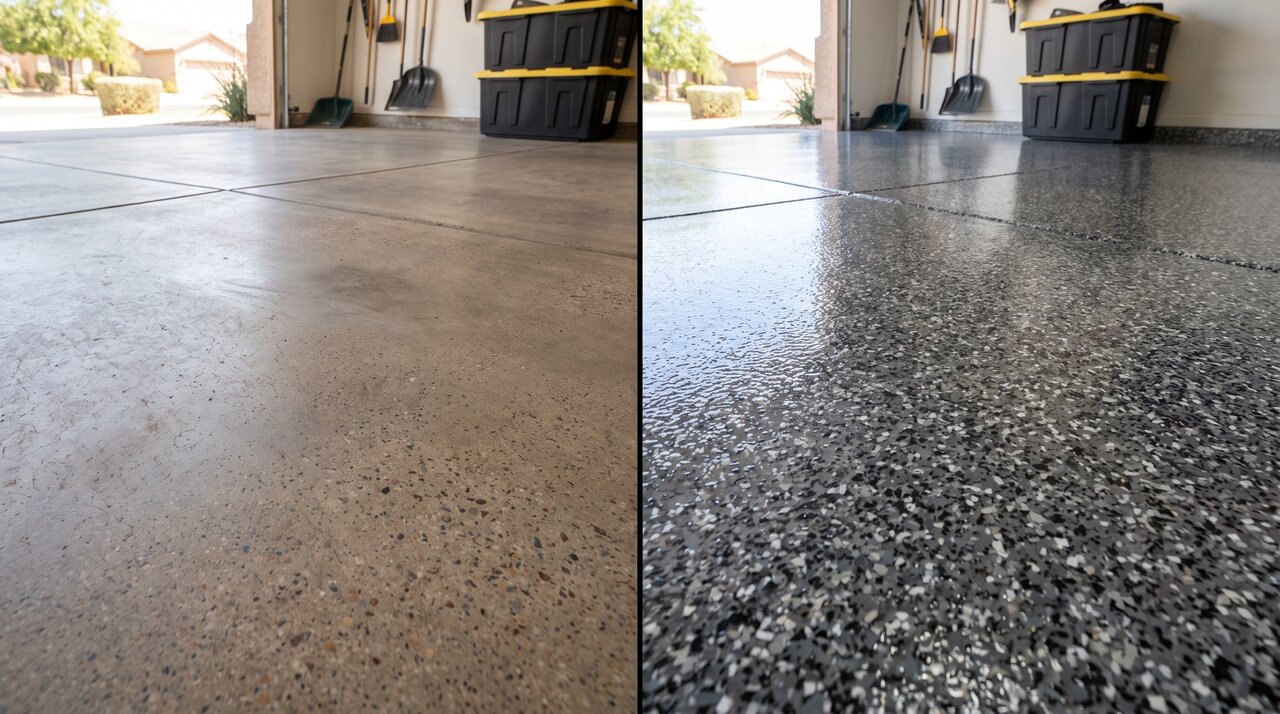
Phoenix homeowners choosing a concrete floor system face two fundamentally different approaches: concrete grind and seal Phoenix and epoxy coating. Both start with diamond grinding the concrete surface, but diverge completely after that. Grind and seal preserves and protects the natural concrete. Epoxy adds a full surface layer with color, texture, and depth. Which wins depends entirely on the application - and in Phoenix's climate, the wrong choice means early failure.
1. What Each System Does to Your Phoenix Concrete
Concrete grind and seal removes the weak surface laitance layer through diamond grinding, then applies a penetrating or film-forming sealer that protects the concrete without masking its natural color and texture. The concrete itself remains the visible surface. The result is a natural, low-sheen or matte look that reads as high-end exposed concrete.
Epoxy coating applies a 100% solid or solvent-based resin system that cures into a thick, hard polymer layer over the concrete. The concrete becomes the substrate - completely hidden beneath the epoxy. Color, decorative flake, metallic pigments, and texture all come from the coating, not the concrete. Epoxy allows complete color control, decorative effects impossible with grind and seal, and a high-gloss finish that reflects light dramatically.
2. Durability: How Each Handles Phoenix's Thermal Extremes and UV
| Factor | Grind & Seal | Epoxy |
|---|---|---|
| Surface temp tolerance | Unlimited - no polymer layer to soften | Depends on topcoat. Aromatic: fails at 140°F. Polyaspartic: 200°F+ |
| UV stability | Penetrating sealers: excellent. Film sealers: recoat every 2–3 yrs | Aromatic epoxy: yellows within 2 yrs. Aliphatic polyaspartic topcoat: 5–8 yrs |
| Thermal cycling | Moves with slab - no delamination risk | Edge and crack points are failure risk under repeated cycling |
| Outdoor lifespan | 8–12 yrs with polyaspartic sealer | 5–10 yrs if properly installed; lower if edges lift |
| Indoor garage lifespan | 5–8 yrs before resealing | 10–15 yrs with polyaspartic topcoat |
| Hot tire pickup risk | None - no polymer layer to soften | High with standard epoxy. Eliminated with aliphatic polyaspartic topcoat |
3. Appearance: Natural Look vs Decorative Finish Options
If the goal is a natural concrete look - especially suited to modern desert architecture - grind and seal is the only way to achieve it. Epoxy covers concrete completely; no epoxy system produces a "natural concrete" look.
If the goal is decorative impact - color, metallic effects, 3D depth, high-gloss reflectivity - epoxy is the only path. For polished concrete floors with a refined stone-like appearance, diamond polishing with densifier and guard is a third option bridging both systems.
4. Slip Resistance: Outdoor vs Indoor Safety
- Grind and seal outdoors: Ground concrete texture itself provides slip resistance. Anti-slip aggregate in the sealer layer adds grip. Because texture is built into the concrete, it doesn't wear away as the sealer degrades.
- Epoxy indoors: Anti-slip aggregate broadcast into the wet topcoat adds texture. Adequate for garage floors with normal foot and vehicle traffic.
- Pool decks: Grind and seal strongly preferred. The aggregate-in-sealer approach maintains grip even when the film degrades partially, and rough concrete texture is more forgiving on bare wet feet than a polished epoxy topcoat edge.
5. Maintenance: Recoat Schedules in Arizona's Climate
| Maintenance Task | Grind & Seal | Epoxy |
|---|---|---|
| Daily cleaning | Sweep or damp mop | Sweep or damp mop |
| Chemical spills | Wipe promptly - penetrating sealers allow some absorption | Wipe promptly - impermeable surface |
| Outdoor recoat (Phoenix) | Every 3–5 yrs (penetrating) / 2–3 yrs (film) | Every 5–8 yrs with polyaspartic topcoat |
| Indoor recoat (Phoenix) | Every 5–7 yrs | Every 10–15 yrs with polyaspartic topcoat |
| Recoat cost (450 sq ft) | $500–$900 | $800–$1,500 (topcoat refresh only) |
6. Cost Comparison: Phoenix 2026 Pricing
| System | Install Cost/sq ft | 450 sq ft Garage | 10-yr Total* |
|---|---|---|---|
| Grind & Seal (penetrating sealer) | $2–$3 | $900–$1,350 | $1,400–$2,150 |
| Grind & Seal (polyaspartic sealer) | $3–$4 | $1,350–$1,800 | $1,850–$2,600 |
| Garage epoxy (standard) | $4–$6 | $1,800–$2,700 | $1,800–$2,700 |
| Epoxy with polyaspartic topcoat | $6–$8 | $2,700–$3,600 | $2,700–$3,600 |
*10-yr total includes one reseal for grind-and-seal. Epoxy with polyaspartic topcoat typically requires no recoat within 10 yrs in a residential garage.
7. When to Choose Each System
- Outdoor surface - patio, driveway, pool deck
- Natural concrete look is the design goal
- Budget favors lower upfront cost
- Phoenix exterior with full sun exposure
- Pool deck or wet outdoor area
- Indoor garage - maximum durability
- Decorative effect - metallic, flake, high-gloss
- Chemical resistance critical (automotive, kitchen)
- Full color uniformity required
- Want 10+ years before any maintenance
8. Frequently Asked Questions
Not Sure Which System Fits Your Project?
Free on-site consultation, surface assessment, and written quote for grind-and-seal or epoxy.