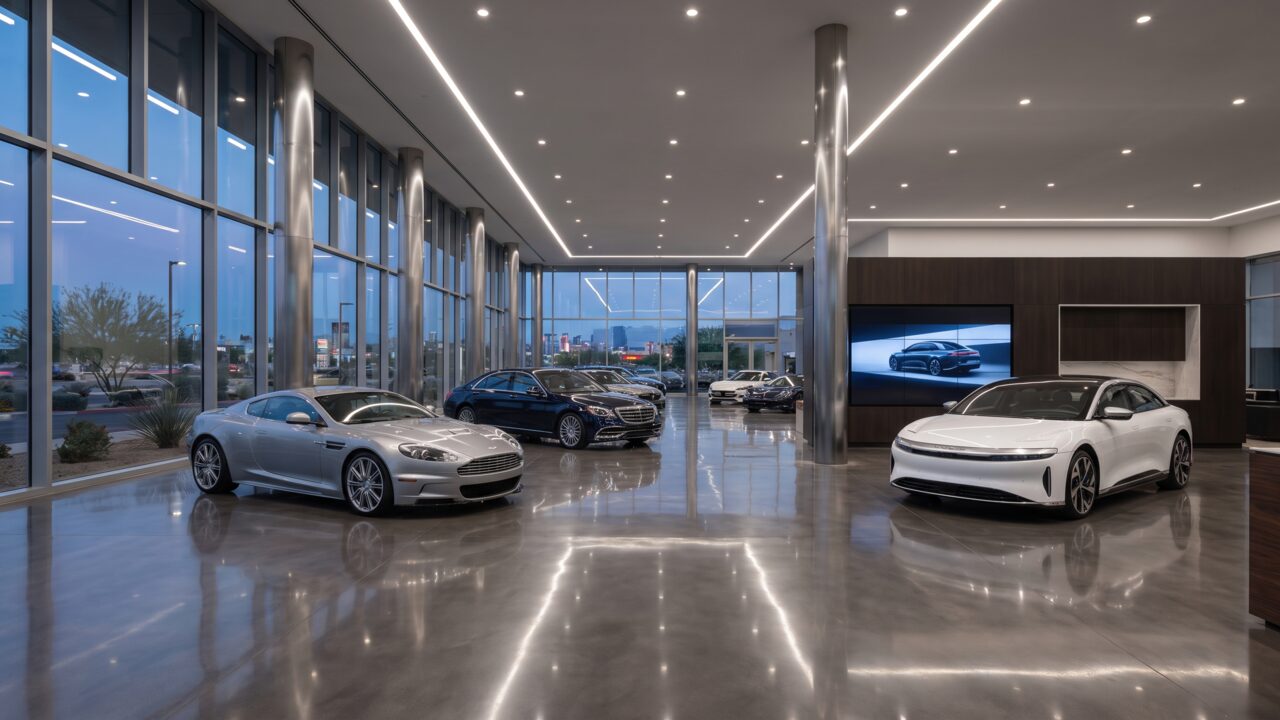
Architects and interior designers increasingly specify concrete polishing Phoenix for high-visibility commercial spaces - not as a budget compromise, but as a deliberate design choice that outperforms carpet, tile, and VCT on durability, appearance, and long-term cost across auto showrooms, office lobbies, and retail environments.
1. Why Phoenix Architects and Interior Designers Specify Polished Concrete
Polished concrete offers a rare combination in commercial specification: it's simultaneously the most durable flooring option and among the most design-flexible, supporting everything from minimalist matte finishes to dramatic high-gloss statements. For Phoenix commercial projects balancing budget, maintenance, and aesthetics, polished concrete consistently rises to the top of the shortlist.
2. Auto Dealership Showrooms: The Phoenix Standard for Polished Concrete
Auto dealerships were early and enthusiastic adopters of polished concrete, and it remains the Phoenix standard for showroom floors. Vehicle weight, occasional fluid drips, and constant foot traffic in dress shoes are all well within polished concrete's performance envelope, and unlike epoxy, damage can be repaired with color-matched compound that blends invisibly rather than leaving a visible patch.
3. Corporate Office Lobbies: First Impressions on a Phoenix Budget
Corporate lobbies need to project quality without the cost of natural stone. Polished concrete at Level 3–4 gloss delivers a sophisticated, reflective first impression at a fraction of granite or marble installation cost, while requiring dramatically less ongoing maintenance than either natural stone or carpet alternatives.
4. Retail and Restaurant Polished Concrete in Phoenix
High-reflectivity finishes improve merchandise lighting and perceived brightness while eliminating grout-line maintenance in high-foot-traffic zones.
Satin-to-semi-gloss finishes provide an upscale, easy-clean surface for dining areas without the slip risk of high-gloss near service zones.
Sealed, densified polished concrete in kitchens and prep areas resists grease and repeated washdown better than sealed but unpolished concrete.
5. LEED Certification: How Polished Concrete Supports Green Building in Phoenix
Polished concrete leverages the building's existing structural slab rather than introducing new flooring materials - directly supporting LEED Materials and Resources credits. The elimination of adhesives, backing materials, and synthetic fibers found in carpet and vinyl also reduces indoor VOC emissions, a factor in LEED Indoor Environmental Quality scoring. Several Phoenix commercial projects have achieved LEED Silver or Gold certification with polished concrete as a documented contributing material choice.
6. Maintenance Programs for Phoenix Commercial Polished Concrete
Unlike carpet (periodic replacement) or VCT (regular stripping and waxing), polished concrete maintenance is straightforward and inexpensive: routine dust mopping, quarterly machine burnishing in high-traffic zones, and annual lithium densifier/guard reapplication. Phoenix commercial clients on maintenance contracts typically spend a fraction of comparable carpet or tile upkeep costs over a building's operating life.
7. Commercial Polished Concrete Cost and ROI in Phoenix
| Flooring | Install Cost/sq ft | 20-Yr Maintenance | Replacement Cycle |
|---|---|---|---|
| Polished Concrete (Lvl 2-3) | $4–$7 | Low - burnish + guard | Never (refinish only) |
| Commercial Carpet | $3–$8 | Moderate - cleaning | 7–10 years |
| VCT Tile | $2–$4 | High - weekly wax | 10–15 years |
Over a 20-year building ownership horizon, polished concrete consistently costs 30–50% less than carpet or VCT when installation and maintenance are combined. See our commercial epoxy flooring, stained concrete floors, and concrete grind and seal guides for related commercial finish options.
8. Frequently Asked Questions
Commercial Polished Concrete Quote
Free on-site assessment and written proposal for your Phoenix commercial project.