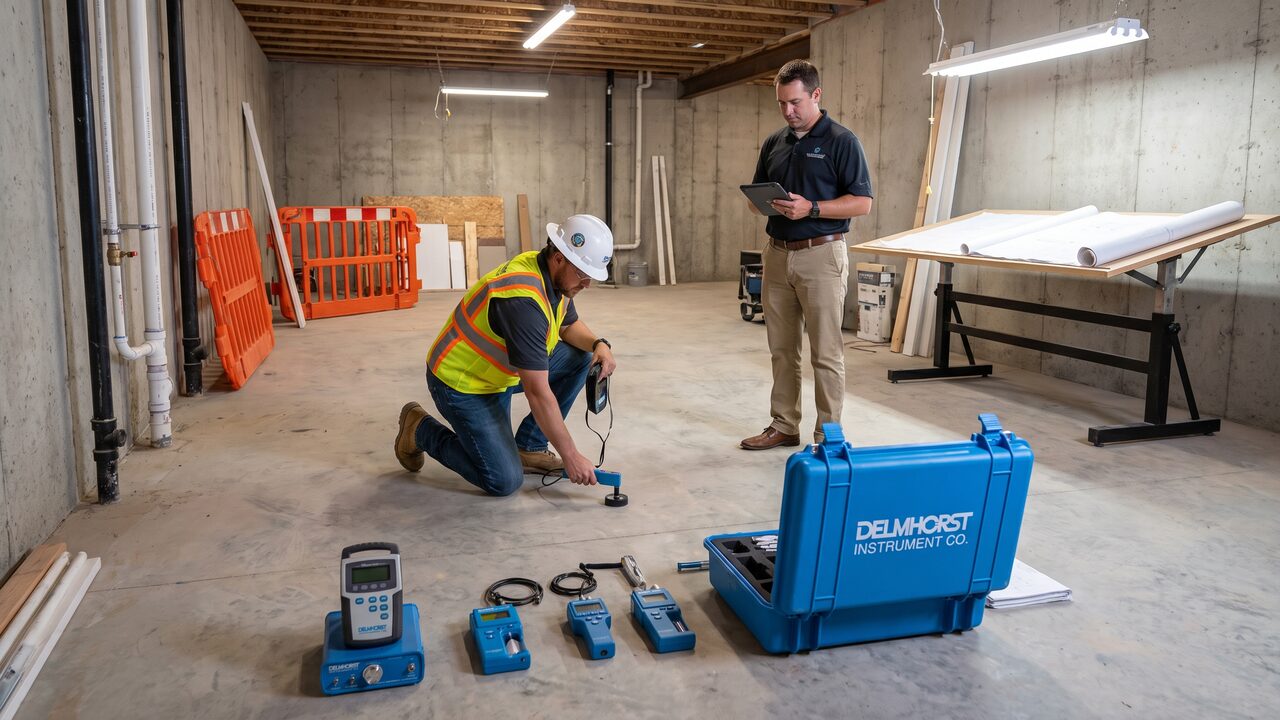
Phoenix basements sit on a geology most epoxy installers never encounter: caliche, a dense calcium-carbonate soil layer that traps subsurface moisture and creates unpredictable vapor emission through concrete slabs. Skipping moisture testing on a basement epoxy floor Phoenix project is the single most common cause of coating failure - this guide covers the science and the correct installation sequence.
1. The Unique Moisture Challenge of Phoenix Basement Floors
Basements are uncommon in Phoenix - most homes are slab-on-grade - but where they exist (older custom homes, luxury builds, some Arcadia and Biltmore-area properties), the below-grade concrete faces moisture exposure that above-grade slabs never see. Even in a desert climate averaging 8 inches of annual rainfall, below-grade concrete is in constant contact with soil moisture, and Phoenix's caliche layer complicates this further by trapping and redirecting that moisture in ways installers from other markets don't anticipate.
The result: a basement slab that feels bone-dry to the touch can still be emitting enough moisture vapor to destroy a standard epoxy installation within months. This is why moisture testing - not visual inspection - is the only reliable way to assess a Phoenix basement floor before coating.
2. What is MVT (Moisture Vapor Transmission) and Why It Matters
Moisture Vapor Transmission (MVT) measures the rate at which water vapor passes through a concrete slab, expressed in pounds per 1,000 square feet per 24 hours. Concrete is porous at a microscopic level - even fully cured, hardened concrete allows water vapor to migrate from wet soil below to drier air above through capillary action, a process that continues for the life of the slab.
Standard epoxy coatings create a vapor-impermeable barrier at the surface. When applied over a slab with high MVT, trapped vapor pressure builds beneath the coating with nowhere to escape, eventually causing blistering, delamination, or complete coating failure - sometimes within weeks of installation in severe cases.
3. ASTM F2170 vs ASTM F1869: Phoenix Industry-Standard Moisture Tests
| Test | Method | Measures | Timeframe |
|---|---|---|---|
| ASTM F2170 | In-situ RH probes | Relative humidity within slab | 72 hours (industry preferred) |
| ASTM F1869 | Calcium chloride test | Surface vapor emission rate | 60–72 hours |
ASTM F2170 (in-situ relative humidity probes drilled into the slab) is considered more accurate and is ProEpoxy's preferred method for Phoenix basement assessments, since it measures conditions deep within the slab rather than only at the surface. ASTM F1869 (calcium chloride surface test) is faster and less invasive but can under-report moisture in slabs with uneven internal distribution - common in Phoenix due to caliche's irregular moisture-trapping pattern.
4. Moisture-Tolerant Epoxy Primers: How They Work Differently
For moderate MVT readings, moisture-tolerant epoxy primers offer a middle-ground solution between standard epoxy and full vapor barrier systems. These primers use modified resin chemistry that can bond and cure even in the presence of moderate moisture vapor - typically effective up to 5–8 lbs/1,000 sq ft/24 hours depending on the specific product.
The key difference from standard primers: moisture-tolerant formulations don't attempt to fully block vapor transmission - they accommodate it while maintaining bond strength, similar to how a breathable membrane manages moisture differently than a fully sealed barrier.
5. When You Need a Full Vapor Mitigation System (Not Just a Primer)
Readings above 8–10 lbs/1,000 sq ft/24 hours (ASTM F1869) or relative humidity above 90% (ASTM F2170) exceed what moisture-tolerant primers can manage. These conditions require a full vapor mitigation system:
- Epoxy/polyurethane membrane systems: Multi-coat build creating a true vapor barrier at 100% solids, typically 15–20 mil minimum thickness rated for vapor emission up to 25 lbs/1,000 sq ft/24 hours.
- Polyurethane injection systems: For severe cases, injected below-slab barriers address moisture at its source rather than only at the surface.
Vapor mitigation systems add $2–$4 per square foot to a standard basement epoxy project but are non-negotiable when testing indicates high MVT - skipping this step guarantees premature failure regardless of topcoat quality.
6. Common Phoenix Basement Epoxy Failures and What Went Wrong
Most common failure cause. Installer or DIY homeowner applies standard epoxy without testing, coating blisters within 3–8 months as trapped vapor pressure builds.
MVT tested during Phoenix's dry spring months shows low readings, but monsoon-saturated caliche later raises vapor emission well above what was tested.
Primer rated for moderate moisture applied where testing actually showed severe readings requiring full membrane - insufficient protection, early failure.
7. Correct Installation Sequence for Phoenix Basement Epoxy
MVT Testing
ASTM F2170 in-situ probes installed, 72-hour reading taken before any surface work begins.
Diamond Grinding
Mechanical surface prep to CSP 2–3 profile, removes any existing coatings and opens pores for bond.
System Selection
Based on MVT results: standard primer, moisture-tolerant primer, or full vapor barrier membrane specified.
Base Coat + Vapor Barrier (if needed)
Primer or membrane system applied per manufacturer spec, full cure time observed before proceeding.
Decorative Mid-Coat + Topcoat
Color, flake, or metallic system applied with UV-stable topcoat appropriate for the space's use and light exposure.
Related reading: epoxy floor repair for diagnosing existing moisture-related failures, and concrete grind and seal as an alternative for basements with confirmed high MVT where a full epoxy system isn't cost-effective.
8. Frequently Asked Questions
Free Moisture Testing & Basement Quote
On-site MVT assessment and written system recommendation for your Phoenix basement floor.